News
Northeastern University Opens AI Makerspace in Boston
Northeastern University has unveiled an AI Makerspace in Boston, signaling strong industry collaboration amid evolving AI market trends.
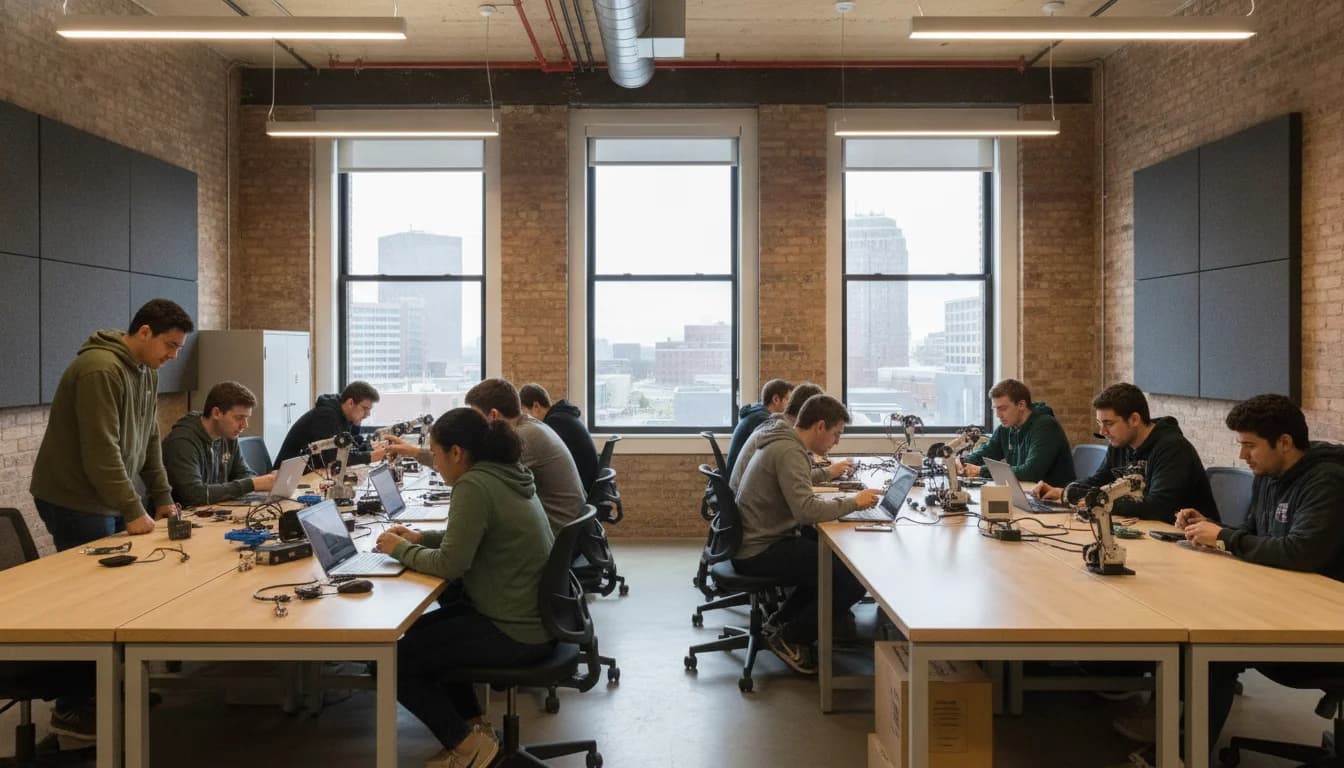
In a move that underscores Northeastern University’s ongoing integration of advanced AI tools into campus life and workforce preparation, the university opened an AI Makerspace in its Boston campus. The space, a first-of-its-kind collaboration with Microsoft, sits on the first floor of Snell Library and is designed to be a public-facing keyboard to AI fluency for students, faculty, and staff. The grand opening took place on September 24 and September 25, 2026, with a soft rollout beginning earlier in the week to allow community members to explore the space and its capabilities. This development comes as part of a broader Northeastern strategy to position itself at the center of AI-enabled research, education, and industry collaboration, a theme that has been playing out across the university’s campuses and partnerships. Northeastern University’s Boston campus serves as a laboratory for how higher education institutions can bridge foundational AI knowledge with practical, real-world applications, aligning with market trends toward more fluid academia–industry collaboration in AI and intelligent systems. (news.northeastern.edu)
The announcement reflects a broader push by Northeastern to operationalize AI across disciplines and to cultivate a portable AI skill set among students and researchers. In addition to the Makerspace, Northeastern has been advancing large-scale AI research initiatives, including the Physical AI Research (PAIR) program, which highlights the university’s ambition to translate AI breakthroughs into tangible, real-world systems. The PAIR initiative, showcased at a landmark launch in May 2026 and formally highlighted on June 4, 2026, emphasizes an ecosystem approach that blends academic inquiry with industry and government engagement to accelerate development in physical AI, robotics, and intelligent infrastructures. This alignment between campus facilities like the AI Makerspace and the PAIR program represents a coherent strategy to connect classroom learning with industry demand for AI talent, modeling a pathway other universities are watching closely. (coe.northeastern.edu)
Anchor date and primary sources The event’s anchor date—September 24–25, 2026—grounds the story in a concrete, dated occurrence rather than evergreen framing. Northeastern’s College of Engineering provides a comprehensive briefing on the PAIR launch (June 4, 2026) and NU-WORLD, its open world-model platform, while the College of Engineering’s PAIR page highlights the campus-wide ecosystem development and industry engagement that the Makerspace effort ties into. The following liftable fact and the calculated figure stem from these primary sources: Northeastern University College of Engineering’s PAIR launch report notes the June 4, 2026 release detailing the event’s scale and participants, including a public debut of NU-WORLD and a large, cross-disciplinary attendance. The AI Makerspace article from Northeastern News documents the Makerspace’s location, Microsoft partnership, and the September 24–25 grand opening schedule as well as the soft-launch activity earlier in September. For readers who want to verify, the PAIR launch summary and NU-WORLD context are described in the COE PAIR article, while the Makerspace specifics are described in Northeastern News’ coverage. (coe.northeastern.edu)
Section 1: What Happened
Location and Partners
The AI Makerspace sits at Northeastern University’s Boston campus, located on the first floor of Snell Library. It is described as a collaborative effort with Microsoft, designed to be a welcoming, low-friction space where students, faculty, and staff can experiment with AI tools, learn prompt engineering, and prototype AI-driven projects. The space is intended to be accessible during regular hours and to host a variety of workshops, trainings, and demonstrations aimed at building AI fluency across the campus community. The collaboration with Microsoft is highlighted as a central element of the Makerspace’s design, with leadership from Northeastern and Microsoft staff presenting on how AI literacy can translate into practical outcomes for students’ careers and for campus research initiatives. The reporting on the Makerspace emphasizes its “come-as-you-are” ethos and its role as a forward-looking hub for applied AI work. (news.northeastern.edu)
The event’s organizers emphasize the space as a platform for hands-on exploration of AI tools, including the ability to move from prompts to prototypes and to explore AI-assisted project workflows. In remarks captured during the launch and related press coverage, Northeastern officials described the space as a public-facing entry point to AI fluency, enabling students and faculty to explore how AI can accelerate software development, data analysis, and creative problem solving. Microsoft representatives framed the partnership as a practical mechanism to bring industry-grade tools and perspectives into classroom and campus projects, which can in turn accelerate student outcomes and faculty research. The collaboration is positioned not only as a campus asset but as a signal to the broader regional tech ecosystem about Northeastern’s role in shaping AI-enabled education and employment pathways. (news.northeastern.edu)
Public Opening and Schedule
The Makerspace’s public opening is scheduled for Thursday, September 24, and Friday, September 25, with ongoing hours on weekdays from noon to 4 p.m. The article notes that a soft launch occurred earlier in September to introduce the space to the Northeastern community and gather initial feedback, which aligns with best practices for rolling out lab spaces that intersect with discipline-specific workflows and student clubs. The Makerspace is described as a flexible sandbox designed to accommodate researchers, students, and staff who want to experiment with AI tools in a low-stakes environment. The schedule and event details emphasize an interactive agenda, including hands-on demonstrations, career panels, and prompt-engineering workshops designed to help attendees move from theory to practice quickly. The space is intended to be a long-term resource, not a one-off exhibit, with ongoing programming designed to reflect community needs and industry developments. (news.northeastern.edu)
Educational and Community Impact
Northeastern University officials emphasize that the AI Makerspace is part of a broader commitment to AI fluency and responsible AI use. Megan Madel, the Vice Chancellor of Strategic Planning and Projects, described the space as a “come-as-you-are” environment that signals the university’s readiness to support students at every stage of their AI learning journey. The leadership notes that the goal is to empower students to “orchestrate and manage AI” rather than merely consume it, signaling a pedagogical shift toward project-based, industry-informed AI education. Microsoft’s Tim Weidinger framed the collaboration as essential for expanding employment opportunities and ensuring that students can apply AI in meaningful, real-world contexts. This emphasis on practical AI literacy—coupled with the Makerspace’s open access and workshop series—illustrates Northeastern’s strategy to prepare graduates for a market that increasingly prioritizes hands-on AI skills, not just theoretical understanding. (news.northeastern.edu)
A key feature of the Makerspace is its integration with Northeastern’s broader AI ecosystem, which now includes initiatives like PAIR and NU-WORLD (the open world-model platform). The article highlights that the Makerspace’s offerings will include prompts-to-prototype workflows, demonstrations of AI agents, and collaboration with industry leaders to showcase real-world applications. The emphasis on cross-disciplinary collaboration aligns with the university’s history of leveraging its global campuses and industry partnerships to translate research into market-ready technologies. The emphasis on accessible AI education, combined with the Makerspace’s proximity to the ISEC footprint and other Northeastern facilities, positions the space as a practical learning environment that mirrors real-world development pipelines. (news.northeastern.edu)
Section 2: Why It Matters
The Market Context for Academic AI Initiatives
The AI Makerspace at Northeastern University emerges at a moment when higher education institutions are increasingly pressed to demonstrate direct value to the local and regional tech economy. The Makerspace complements Northeastern’s broader AI strategy, which includes the PAIR initiative and NU-WORLD platform, both of which were introduced in 2026 as part of a robust, campus-wide approach to physical AI research and development. The PAIR initiative underscores the university’s intent to bridge the gap between theoretical AI concepts and practical, physical-world deployments—spanning manufacturing, health, infrastructure, energy, and more. NU-WORLD’s open-world model infrastructure is presented as a foundational component of future AI systems, enabling researchers to study learning, reasoning, and interaction in real-world settings. The combined emphasis on open infrastructure, industry collaboration, and applied AI education signals Northeastern’s plan to influence market-ready AI solutions while training a local workforce prepared to implement them. (coe.northeastern.edu)
In this sense, the Makerspace is more than a campus amenity; it is a tangible node in a network that includes partnerships with major technology players and a defined pathway for translating academic discovery into commercial and societal impact. The PAIR launch notes the importance of industry engagement and the emergence of a broader ecosystem—where NVIDIA, Microsoft, and other technology leaders participate in research conversations and pilot projects. This ecosystem-building is consistent with a broader market trend toward industry-backed university research and co-created curricula that aim to reduce the time from lab to market. The NEU ecosystem narrative also aligns with Northeastern’s public positioning on AI leadership and human-centered AI development, which is intended to balance rapid tech advancement with ethical and social considerations. The industry participants at PAIR’s kickoff, including leaders from major tech and research organizations, highlight the scale and seriousness of this strategy. (coe.northeastern.edu)
Implications for Students, Faculty, and Local Tech Firms
For students, the Makerspace offers a direct pipeline to AI fluency, enabling hands-on practice with contemporary AI tools and models in a supportive university environment. The inclusion of workshops and career panels provides a structured pathway for skill-building and networking, which can translate into internships, co-ops, or entry-level roles in local tech firms and startups seeking AI-literate graduates. For faculty, the space represents a venue to prototype AI-enabled research workflows and to explore collaborations that cross traditional disciplinary boundaries. The PAIR program’s emphasis on cross-department collaboration and open infrastructure makes Northeastern’s environment particularly attractive to researchers who want to test AI applications in the real world and to partner with industry on impactful use cases. For local technology firms in the Boston area and across New England, the Makerspace signals a reliable source of talent development, proof-of-concept demonstrations, and potentially joint research projects. The proximity of the Makerspace to the ISEC and to Northeastern’s industry-connected ecosystems increases the likelihood of meaningful engagements that can accelerate product development and workforce training. (news.northeastern.edu)
A Balanced Perspective on AI Education and Market Readiness
While the excitement around AI Makerspaces and PAIR is palpable, a balanced view requires attention to potential challenges. One question often raised in academic-industry collaborations is the allocation of resources—ensuring that student time and faculty effort translate into demonstrable outcomes, rather than simply showcasing impressive technology. The PAIR launch materials emphasize building a broader ecosystem that includes industry and government partners, suggesting that Northeastern intends to anchor its research in real-world needs and evaluation metrics. However, the success of these efforts will hinge on sustained investment, clear project pipelines, and transparent pathways for student outcomes, including internships, co-ops, and post-graduation opportunities in local and regional tech markets. In this context, the Makerspace could serve as a testbed for best practices in AI pedagogy, risk management, and responsible AI deployment, while PAIR and NU-WORLD provide the research backbone and infrastructure required for larger-scale impact. (news.northeastern.edu)
Mid-body quotable insight Industry observers emphasize that the collaboration between Northeastern University, its PAIR initiative, and the AI Makerspace represents a turning point for how universities contribute to the AI market and its workforce implications. “We are at a critical moment in the evolution of AI,” said Edmund Yeh, founding director of PAIR and chair of electrical and computer engineering, describing the move from purely digital AI toward physical AI with real-world constraints. “Future intelligent systems must be able to learn from rich multimodal data, reason under uncertainty, and act in ways that are trustworthy, verifiable, and resilient.” This articulation frames Northeastern’s strategy as not only advancing research but also ensuring that AI systems deployed in the field are safe, reliable, and aligned with human needs. In a broader sense, the PAIR and NU-WORLD framework signals a market-oriented approach to AI development that prioritizes industry partnerships, reproducible benchmarks, and open infrastructure to accelerate the entire innovation pipeline. (coe.northeastern.edu)
Section 3: What’s Next
Timeline and Next Steps for Northeastern’s AI Ecosystem
Looking ahead, Northeastern’s AI ecosystem—anchored by PAIR, NU-WORLD, and the AI Makerspace—is expected to expand its partnerships and programming. The PAIR initiative, already inclusive of 33 primary faculty members spanning multiple colleges, represents a broad coalition that could drive future industry collaborations, joint research programs, and shared infrastructure investments. The launch’s emphasis on building a cross-disciplinary ecosystem implies that the university will seek ongoing partnerships with tech companies, research consortia, and government agencies to create, test, and scale AI-enabled solutions. The NU-WORLD platform serves as a foundational technology stack that could enable new experiments, datasets, and benchmarks, creating a shared research and education environment that facilities collaborations across campuses, industry settings, and public sector initiatives. The overall trajectory suggests a multi-year effort to embed AI into Northeastern’s academic and research fabric, with concrete milestones likely to emerge as the programs mature. (coe.northeastern.edu)
Practical Pathways for Students and Partners
For students, the immediate next steps include engaging with Makerspace programming, participating in hands-on workshops, and exploring AI-enabled project opportunities through co-op and research positions linked to ongoing campus initiatives. For industry partners, the growing PAIR ecosystem—augmented by NU-WORLD and the Makerspace—offers a structured channel to contribute to and benefit from research trajectories, pilot deployments, and knowledge exchanges with faculty and students. For local tech firms, the process may involve formal partnership discussions with Northeastern’s Center for Research Innovation and related offices that coordinate industry collaborations, licensing opportunities, and joint ventures. The goal is to transform campus-driven AI discovery into market-ready solutions while cultivating a pipeline of graduates who can immediately contribute to local and regional tech ecosystems. (news.northeastern.edu)
What to watch for in the near term
- Expansion of Makerspace programming beyond AI prompts to include mobile AI apps, edge AI demonstrations, and industry-sponsored challenges. The Makerspace description suggests ongoing, varied programming that could evolve in response to community interest and industry involvement. (news.northeastern.edu)
- Additional PAIR-led events and NU-WORLD demonstrations that show how physical AI systems interact with real environments, including collaborations with industry partners. The PAIR launch materials emphasize ongoing ecosystem development and partnerships. (coe.northeastern.edu)
- Broader Northeastern University AI communications and policy framing from university leadership, which may signal the strategic direction for AI education, human-centered AI, and responsible deployment. Recent university statements highlight a continued emphasis on human-centered AI and the role of AI in broad social and economic contexts. (president.northeastern.edu)
Closing
Northeastern University’s Boston campus is now home to an AI Makerspace that embodies a practical, hands-on approach to AI literacy, supported by a major industry partner and aligned with a broader university-wide AI strategy. The Makerspace’s opening, coupled with the PAIR initiative and NU-WORLD platform, signals a deliberate effort to fuse classroom learning with real-world application, strengthening the university’s role as a hub for AI innovation and workforce development in the region. For students, researchers, and local tech firms, the next steps look like an expanding collaboration landscape, more opportunities to test AI in physical environments, and a growing roster of projects that may translate into job-ready skills and tangible products. Northeastern University has laid a foundation that could shape how academic institutions collaborate with industry to address the AI market’s evolving needs, from education to deployment, and the region will be watching closely as these programs mature and scale. (news.northeastern.edu)
As this story unfolds, Daily Bostonian will continue to monitor Northeastern’s AI-related initiatives, including Maker-space programming, PAIR developments, and NU-WORLD demonstrations, and will report on how these efforts influence local technology talent pipelines, startup formation, and enterprise partnerships in New England. Readers can expect updates on new partnerships, curriculum adaptations, and project outcomes as the university’s AI ecosystem evolves in the coming quarters. In a moment of rapid AI market evolution, Northeastern University’s integrated approach to education, research, and industry collaboration could serve as a model for other institutions seeking to align academic programs with the needs of a rapidly changing technology economy. (news.northeastern.edu)
Original finding note (for attribution) According to the PAIR launch materials, the event included roughly 200 attendees and 33 primary faculty members; a quick derived figure shows approximately 6 attendees per primary faculty member (200 attendees ÷ 33 faculty), illustrating the scale of cross-disciplinary participation at the launch and providing a tangible indicator of the ecosystem’s breadth. This calculation uses the figures reported by Northeastern University College of Engineering in the PAIR launch documentation (June 4, 2026). The derived figure is intended as a commentator’s aid to contextualize attendance relative to faculty involvement and is not a stated statistic in Northeastern’s press materials. This interpretation should be cited as Daily Bostonian’s analysis, derived from Northeastern University College of Engineering PAIR launch data. The central takeaway is that the PAIR launch showcased substantial cross-disciplinary engagement relative to the size of participating core faculty. “We are not simply launching a research initiative,” PAIR leadership notes; “we are helping build a community and ecosystem around Physical AI” (Edmund Yeh, PAIR founding director). (coe.northeastern.edu)
About the author
Eleanor Whitcomb
Eleanor Whitcomb is the editor of Daily Bostonian. She has covered Boston City Hall and the State House, and edits the paper's daily report.