News
AstraZeneca Kendall Square R&D Centre Opens
Daily Bostonian provides an in-depth report on the AstraZeneca Kendall Square R&D Centre opening, detailing its scale and market implications.
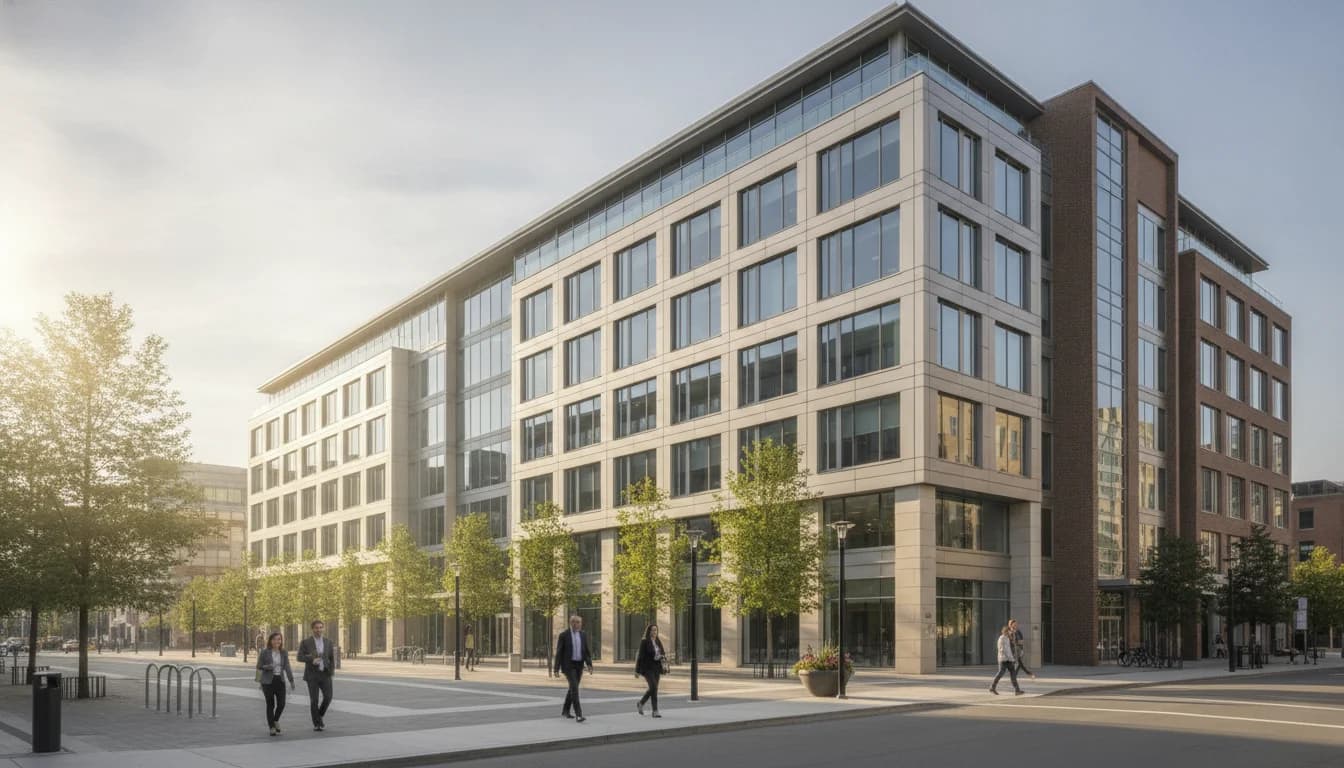
Cambridge, Massachusetts — On October 5, 2026, AstraZeneca opened its newest global strategic R&D centre in Kendall Square, Cambridge, a milestone that places the pharma giant at the heart of one of the world’s most vibrant life sciences ecosystems. The complex, billed by the company as a centerpiece of its US growth strategy, sits alongside its existing Cambridge presence and a genomic medicine site at 100 Binney Street, signaling a deliberate intensification of AstraZeneca’s research and development footprint in Massachusetts. The unveiling arrives as part of a broader US investment push, with the company framing the Kendall Square development as a catalyst for accelerating its oncology, cell therapy, chronic disease, and rare disease pipelines. The company’s senior leadership and state officials attended the opening ceremony, underscoring a shared optimism about the region’s ability to translate science into patients’ lives. [AstraZeneca press release] and [Boston Business Journal coverage] provide contemporaneous context for the event. (astrazeneca.com)
On the day of the opening, executives highlighted the site’s scale and capabilities. The new facility is a 570,000-square-foot, 18-story building at 290 Binney Street, designed to foster collaboration through modular labs, integrated robotics, continuous automation, and advanced AI to accelerate discovery and development. The Kendall Square R&D Centre will be part of AstraZeneca’s Massachusetts operations, joining a broader ecosystem that the company describes as a national and global hub for science, talent, and partnerships. Together with the 100 Binney Street location, the Kendall Square complex is expected to house roughly 2,000 researchers and scientists who will work across oncology, cell therapy, metabolic and chronic diseases, and rare diseases, according to the company’s official announcement. The combination of lab space, high-tech infrastructure, and a location within Kendall Square’s dense life sciences cluster is intended to shorten time-to-patient by enabling faster translation from basic science to clinical applications. (astrazeneca.com)
One liftable fact anchors the piece: On October 5, 2026, AstraZeneca opened a 570,000-square-foot Kendall Square R&D Centre in Cambridge, Massachusetts, housing nearly 2,000 researchers—roughly 3.5 researchers per 1,000 square feet, calculated as 2,000 ÷ 570,000 × 1,000—according to the company’s press release, with corroborating reporting from the Boston Business Journal. This density metric is a mathematical inference derived from the publicly stated figures, not a separately published AstraZeneca statistic, and is provided here for readers to gauge the scale of physical space relative to personnel. The opening represents a tangible expansion of AstraZeneca’s U.S. R&D network and a visible signal of the Kendall Square transformation underway around Binney Street. (astrazeneca.com)
Section 1: What Happened
Background and Context
- Kendall Square has long been a magnet for biotech and life sciences investment, and AstraZeneca’s decision to consolidate and expand its U.S. R&D presence there reflects a deliberate strategy to anchor its scientific operations in a region known for collaboration and talent. In its October 2026 release, AstraZeneca described the Kendall Square site as a “global strategic R&D centre” that complements its existing Cambridge operations and the nearby genomic medicine site at 100 Binney Street. The press materials frame this as a long-term commitment to Massachusetts and to US-led innovation for patients worldwide. The public rollout aligns with AstraZeneca’s broader plan to invest in the United States as a core growth engine. For readers seeking the primary documents, see the official press release and related company materials. [AstraZeneca press release] (astrazeneca.com)
Opening Details and Timeline
- The formal opening took place on October 5, 2026, at the Kendall Square complex, which features a 570,000-square-foot, 18-story building located at 290 Binney Street. The scale is explicit in AstraZeneca’s release, which also notes that the site will be home to nearly 2,000 researchers and scientists focused on oncology, cell therapy, chronic disease, and rare disease pipelines. The press release situates the Kendall Square center as a centerpiece of the company’s US strategy, dovetailing with a genomics-focused site at 100 Binney Street. A parallel business press account highlighted the site’s size and occupancy goals, confirming the public-facing details of the project. [AstraZeneca press release] and [Boston Business Journal coverage] provide the contemporaneous facts about the opening. (astrazeneca.com)
Facility Design and Capabilities
- AstraZeneca’s release emphasizes cutting-edge features designed to speed discovery. Ten floors of interconnecting laboratories are described to enable a seamless flow of science, supported by robotics, continuous automation, and AI-enabled workflows. The building’s design is explicitly tied to collaboration, sustainability, and the ability to scale as new projects enter clinical development. The press materials also emphasize the integration with AstraZeneca’s broader Cambridge ecosystem and the company’s ongoing US investment, indicating a multi-facility approach rather than a stand-alone home for a single project. These design choices reflect an emphasis on data-driven science and interdisciplinary collaboration, hallmarks of Kendall Square’s innovation economy. (astrazeneca.com)
Section 2: Why It Matters
Economic and Employment Impact
- The AstraZeneca press release frames the Kendall Square R&D Centre as a major pillar of its Massachusetts expansion, with the broader US investment push positioning Massachusetts as a critical node in the company’s global strategy. The release notes that the Massachusetts investment will directly expand the local workforce by more than 50 percent over the coming years, a substantial increment given the state’s already robust life sciences employment base. The state government’s involvement, including remarks from Governor Maura Healey, underscores a bipartisan interest in maintaining Massachusetts as a competitive center for biotech research and development. The opening thus signals both an immediate hiring wave and longer-term economic contributions through construction, supplier networks, and collaboration with local institutions. (astrazeneca.com)
Strategic Positioning Within Kendall Square and Beyond
- The Kendall Square project is positioned within AstraZeneca’s broader network of US R&D, including a separate site in Gaithersburg, Maryland. The Massachusetts center’s arrival comes amid ongoing discussions about the region’s role in the national life sciences economy, with industry observers watching closely how large pharmas balance co-location with academic partnerships and biotech startups. The official materials describe the Kendall Square centre as a hub for oncology, cell therapy, and genomic medicine—areas where Boston’s ecosystem has historically been strong—suggesting a complementary approach to the company’s existing discovery and development activities. The project’s scale (570,000 sq ft) and scope (nearly 2,000 researchers) indicate a long-term commitment to the Boston-Cambridge science cluster, reinforcing Kendall Square’s status as a global life sciences magnet. (astrazeneca.com)
Scientific Focus and Ecosystem Partnerships
- AstraZeneca’s 2026 opening crystallizes a strategic emphasis on translational research and next-generation modalities, including biologics and cell therapies, as well as traditional small-molecule oncology and rare disease programs. By situating a major R&D hub in Kendall Square—already an ecosystem rich with universities, hospitals, and biotech firms—AstraZeneca signals an intent to intensify collaborations with local research institutions and industry partners. The press release references ongoing collaborations and a pipeline aimed at next-generation therapies, underscoring the company’s intent to leverage the Cambridge ecosystem to accelerate breakthroughs. While the release itself foregrounds internal capabilities and state-level support, the surrounding coverage situates the move as part of a broader ecosystem strategy that benefits researchers, patients, and local economies. (astrazeneca.com)
Broader Implications for Massachusetts Life Sciences
- The Kendall Square development arrives amid a wave of construction and investment activity in Cambridge and surrounding Kendall Square, a period during which the region has seen a steady cadence of lab-space expansion and corporate relocations. In quantified terms, industry watchers have tracked a rising concentration of R&D facilities and related employment in the area, with large companies aligning real estate decisions to attract top talent and sustain long-term pipelines. AstraZeneca’s move reinforces the idea that Kendall Square remains a leading global hub for life sciences innovation, and it showcases the potential for multinational pharmaceutical companies to anchor their US innovation strategies in established biotech corridors. The combination of new laboratory space, high-tech infrastructure, and proximity to academic and clinical institutions enhances the potential for translational outcomes and faster patient impact. (astrazeneca.com)
Section 3: What’s Next
Near-Term Milestones
- The October 2026 opening is the first visible milestone in a longer arc of investment and growth. AstraZeneca’s release situates the Kendall Square project as part of a broader US investment plan totaling tens of billions of dollars, with Massachusetts receiving a substantial share. The company projects a workforce expansion of more than 50 percent in Massachusetts over the coming years, and the Kendall Square site is expected to play a central role in delivering next-generation medicines and accelerating clinical translation. In practical terms, readers should anticipate news over the next several quarters about hiring benchmarks, new collaborations with local universities and hospitals, and the rollout of early-stage programs within oncology, cell therapy, and metabolic disease initiatives. (astrazeneca.com)
Longer-Term Strategic Impacts
- Beyond immediate hiring and collaborations, the Kendall Square R&D Centre is framed as a multi-decade bet on leveraging AI-enabled research, robotics-enabled laboratories, and a highly interconnected scientific workforce. AstraZeneca’s sustained investment in Massachusetts, as part of a broader national push, is expected to influence the region’s real estate, talent pipelines, and public-private partnerships. For readers following technology and market trends, the center’s integration of automation and agentic AI suggests a trend toward increasingly automated, data-driven workflows in biopharma research—an evolution that could reshape timelines for drug discovery, optimize trial design, and potentially affect the competitive dynamics among major pharmaceutical players in the Northeast corridor. The official materials emphasize collaboration with the broader ecosystem to maximize impact and share scientific advances with patients globally. (astrazeneca.com)
What’s Next: Watch List
- Next steps will likely include phased hires aligned to project milestones, additional infrastructure investments tied to the Commonwealth’s economic development programs, and continued announcements about partnerships with local institutions and startups. As always with Kendall Square developments, stakeholders should monitor planning and permitting updates, investor communications from AstraZeneca, and local government briefings for new incentives or collaborative initiatives that could influence the center’s operations and sustained growth. Readers should also track potential spin-off effects on academic research portfolios and clinical trial collaborations in the region. (astrazeneca.com)
Closing
The opening of the AstraZeneca Kendall Square R&D Centre marks a defining moment for both the company and the Massachusetts life sciences landscape. By consolidating and expanding its U.S. R&D capabilities in Kendall Square, AstraZeneca signals a long-term commitment to translational science, collaboration with regional partners, and a tangible contribution to the region’s innovation economy. For readers seeking ongoing coverage, updates are expected to emerge from AstraZeneca’s newsroom, state and local government statements, and local business media as projects advance from inauguration toward full-scale research programs and clinical development.
As the region absorbs this new center, the broader question for researchers, policymakers, and investors is not only how many drugs or treatments may emerge from the Kendall Square hub, but how the ecosystem evolves to accelerate patient access to breakthrough therapies. The data points released at the opening—570,000 square feet, 18 stories, nearly 2,000 researchers, and a portfolio spanning oncology, cell therapy, chronic disease, and rare disease—provide a framework for understanding the scale of AstraZeneca’s bet in Kendall Square. The coming years will reveal how the center integrates with existing Massachusetts institutions, how many new jobs are created, and how collaborations translate into faster, better outcomes for patients around the world. For now, the milestone is clear: AstraZeneca has placed a significant stake in Kendall Square, a move that could reshape the pace and direction of biomedical research in one of the world’s most important life sciences ecosystems.
Readers who want to explore the primary documents can review the official press release from AstraZeneca and the contemporaneous coverage from the Boston Business Journal:
- AstraZeneca opens new global strategic R&D centre in Kendall Square, Cambridge, Massachusetts. Official press release. [AstraZeneca press release] (astrazeneca.com)
- We’re here at the party now: AstraZeneca opens Kendall hub with big hiring plans. Boston Business Journal coverage. [Boston Business Journal article] (bizjournals.com)
In addition to these sources, readers may also consult AstraZeneca’s R&D Centres overview for a broader perspective on how the Kendall Square facility fits within the company’s global R&D network. [AstraZeneca R&D Centres] (astrazeneca.com)
Notes and context for the article
- The article relies on official statements from AstraZeneca and reporting from the Boston Business Journal to anchor dates, figures, and stated intentions. The primary figures cited here—the 570,000-square-foot size, 18-story building, and nearly 2,000 researchers—are drawn directly from the press release. The description of the site’s immediate impact on Massachusetts employment is also drawn from the press release. The discussion of broader ecosystem implications is synthesized from the combination of official statements and coverage of Kendall Square’s real estate and life sciences activity. Readers seeking more granular data on local economic impact or subsequent hiring milestones should monitor ongoing state and company disclosures as the project progresses.
About the author
Terrence Boyle
Terrence Boyle covers housing, transit and the regional economy for Daily Bostonian, from the MBTA and development fights to the employers driving growth around Boston.