News
Massachusetts Bets on MIT Quantum Systems Laboratory
Massachusetts is investing in the MIT Quantum Systems Laboratory, aiming to accelerate regional quantum technology with detailed data insights.
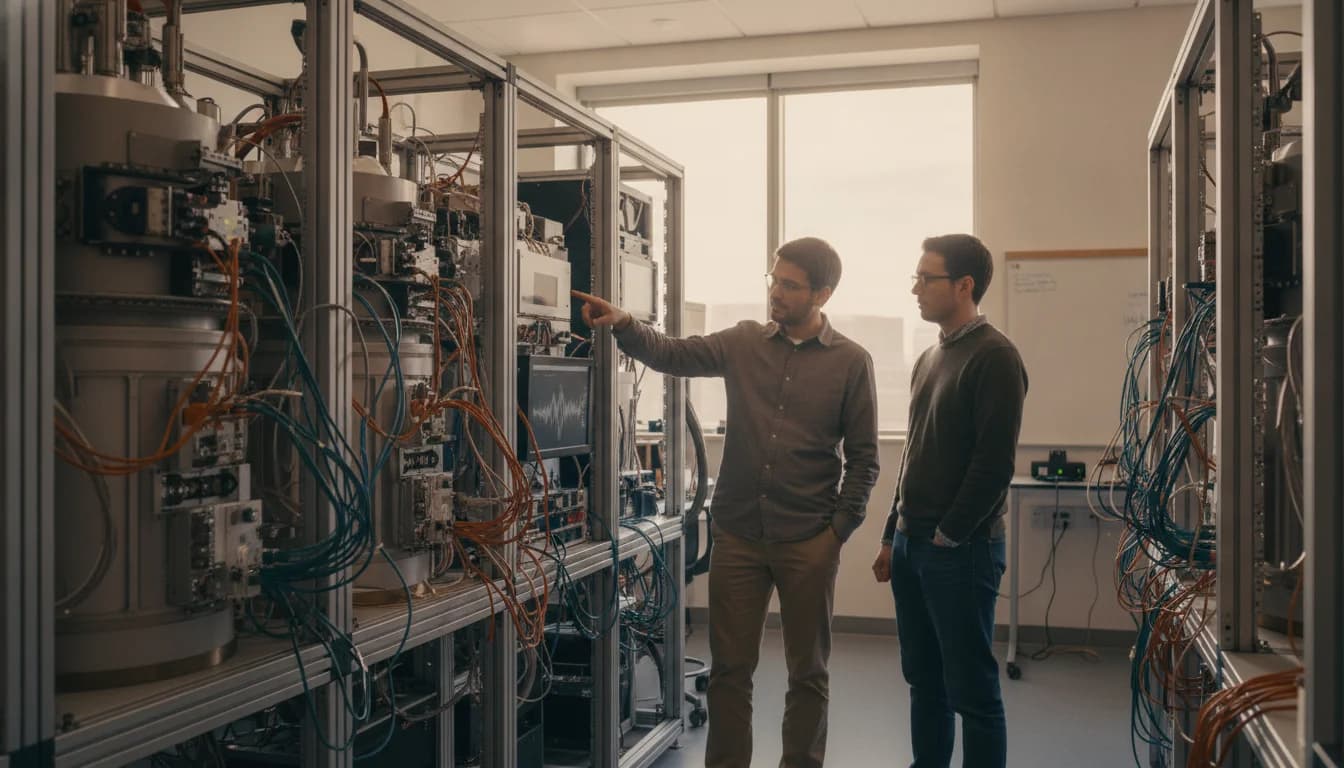
Massachusetts Governor Maura Healey announced on May 28, 2026 that the Commonwealth will contribute $25 million in state funds to MIT's Quantum Systems Laboratory to match federal quantum research dollars already underway at MIT. This announcement, made in a high‑profile campus event, signals a serious commitment to scaling quantum research and regional collaboration, and it positions Massachusetts to become a national hub for quantum technology development. The news was circulated in MIT News and corroborated by state government communications, underscoring a bilateral agreement where state resources align with federal investments to accelerate the nation’s quantum ambitions. The central fact of this investment stands as a clear signal: the state is aligning funding to amplify MIT’s ongoing quantum initiatives at a moment when federal science support is undergoing shifts that could impact research pacing and collaboration. The move matters not only for MIT’s campus ecosystem but also for the broader regional economy that depends on quantum‑oriented startups, research staff, and advanced manufacturing capacity.
The Quantum Systems Laboratory, or QSL, will function as a regional quantum toolbox designed to accelerate collaboration across academia, government, and industry. MIT President Sally Kornbluth and Governor Healey described QSL as a shared‑use facility that will host a combination of cutting‑edge quantum computers, sensors, interconnects, and ancillary hardware. The goal is to enable researchers to move quickly from concept to prototype, and from prototype to deployment, across multiple domains including life sciences, defense, and energy. The lab’s open access premise—extending beyond MIT to partners in the region—was emphasized by MIT leadership as a cornerstone of the project’s philosophy. The MIT News account notes that the facility will be located on the MIT campus, with construction anticipated to begin as early as this summer, and that the state investment complements MIT’s own funding and philanthropic support.
What Happened
Announcement and Partners
On May 28, 2026, MIT President Sally Kornbluth and Massachusetts Governor Maura Healey publicly introduced the Quantum Systems Laboratory at MIT, describing it as a new shared‑use facility intended to catalyze quantum innovation in the region. The event underscored the collaboration between the Commonwealth and MIT, with the state providing a $25 million investment that will match a portion of federal quantum research funds already flowing to MIT. This funding arrangement is positioned to accelerate construction and operational readiness for the QSL, as reported in MIT News and corroborating state outlets. The announcements framed QSL as a regional asset designed to draw researchers from across Massachusetts and beyond to a hub that integrates quantum computing hardware with peripheral instrumentation and interconnects.
The QSL is designed to unite state, regional, and national research efforts by providing researchers access to a consolidated set of quantum resources. The facility will integrate a modern quantum computer with sensors and quantum interconnects, forming a “quantum toolbox” that enables hands‑on experimentation and cross‑institution collaboration. MIT leadership stressed that the hub’s openness will help attract not only MIT researchers but also colleagues from partner universities such as UMass Boston and other regional institutions, broadening the pool of talent and ideas contributing to quantum science and engineering. The intention is to democratize access to top‑tier quantum hardware and the surrounding infrastructure that supports scaling of experiments, software development, and hardware co‑design.
The physical home for this effort will be Building 39 on the MIT campus, with the project framed as a multi‑disciplinary quantum hub. The plan includes upgrading infrastructure in the building to accommodate advanced quantum hardware and experimental setups, ensuring that the environment meets the stringent controls required for quantum research. MIT’s leadership highlighted that the QSL will complement existing cores such as MIT.nano and the SQUILL Foundry at MIT Lincoln Laboratory, creating a broader quantum ecosystem that spans campus labs, private partners, and national facilities. The announcements also highlighted the goal of accelerating innovation in defense and health technologies, reflecting the broad societal relevance of quantum science.
Funding, Timeline, and Immediate Impacts
The state investment of $25 million will be used to support the Quantum Systems Laboratory in a manner that matches federal funding for quantum research already underway at MIT. This approach is designed to accelerate construction and enable early access to the facility for researchers regionally. In addition to the state funds, MIT’s own financial commitment and philanthropic support are expected to contribute to the project’s development and operations. The combination of funds and openness is positioned to shorten the time from research to practical demonstrations that can attract startups and industry partnerships. MIT leadership framed this as a strategic move to ensure the region remains competitive in a rapidly evolving global quantum landscape.
The project’s scale and expected impact were described with concrete figures. Construction on the QSL facility is anticipated to create more than 150 full‑time, on‑site jobs, with an additional 75 to 100 jobs across the Commonwealth in supply chain and professional services supporting the project. These estimates reflect the broader regional economic impulse expected from the project, including potential downstream effects on quantum startups, hardware manufacturers, and service providers that support research facilities of this scale. The collaboration among MIT, the state, and regional stakeholders is framed as a multiplier for the area’s innovation economy, with QSL seen as a platform for startups to access hardware, experimentation space, and a potential path to commercialization.
In terms of the facility’s scope, the QSL is described as hosting a comprehensive set of capabilities: a modern quantum computer integrated with sensors, quantum interconnects, and a variety of experimental tools that researchers can use to test new ideas at scale. The open, regional access approach is intended to foster cross‑institution collaboration, with MIT positioning the hub as a model for shared infrastructure that can support both academic and industry projects. The emphasis on a regional quantum toolbox aligns with broader efforts to anchor quantum talent and investment in Greater Boston and the surrounding region.
Section 1: What Happened
Announcement Details
The May 28, 2026 announcements centered on the launch of a new quantum hub at MIT, the Quantum Systems Laboratory, described as a shared‑use facility designed to accelerate quantum development for the region and the nation. The news highlighted the collaboration between the Commonwealth and MIT, with the state providing funding that will pair with federal quantum investments to accelerate progress. The QSL’s open access and regional footprint were emphasized as key differentiators from other isolated lab setups. The press materials and coverage frame QSL as a foundational element for Massachusetts to remain at the forefront of quantum research, with a focus on practical applications across multiple sectors.
The leadership statements stress the potential for broad economic and scientific benefits. Kornbluth underscored that the Greater Boston region houses the world’s largest concentration of quantum talent, and that the new facility will help magnify that talent by providing shared access to a sophisticated quantum toolbox. Healey framed the investment as a practical step to ensure national leadership in quantum technology while preserving opportunities for collaboration with regional universities and industry partners. The announcements included assurances that the project would align with ongoing MIT initiatives and regional innovation ecosystems.
Funding and Timeline
The funding mechanics were laid out as a state matching arrangement that will complement federal funding already flowing to MIT’s quantum programs. The stated aim is to mobilize capital quickly enough to begin construction as early as the summer of 2026, leveraging the existing momentum around MIT’s quantum initiatives and the state’s willingness to support foundational infrastructure. The QSL project is described as a multi‑year effort that will evolve with ongoing research programs, industry partnerships, and new hires. The explicit timeline—construction set to begin in the near term, with ongoing development over the following years—was designed to provide clarity for researchers and local communities about the project’s pace and impact.
The announcements also flagged the broader strategic rationale: to position Massachusetts as a national hub for quantum innovation that can attract researchers from across the region and the country, and to create a pathway for startups and established companies to engage with high‑level quantum research infrastructure in a shared environment. The state’s investment is presented not as a one‑off grant but as a foundational element of a larger program to cultivate quantum expertise, research capacity, and economic growth in the Commonwealth.
Facility Scope and Access
- The QSL is described as hosting a modern quantum computing platform alongside the required peripheral hardware, including sensors, quantum interconnects, and RF/THz electronics that support real‑world experimentation and integration. The facility’s design aims to enable rapid prototype cycles, cross‑institution collaboration, and a pathway for startups to access critical hardware and lab space. The project is positioned to augment, rather than replace, existing MIT research infrastructure like MIT.nano and Lincoln Laboratory’s SQUILL Foundry, creating a broader, shared quantum ecosystem within Greater Boston and the region.
Section 2: Why It Matters
Regional Economic and Workforce Impacts
The investment is framed as a catalyst for regional economic development and workforce growth. The construction phase is projected to generate substantial employment, with estimates of 150 full‑time, on‑site jobs and an additional 75–100 jobs across the Commonwealth in the supply chain and professional services. These figures reflect the scale of investment and the anticipated multiplier effects in engineering, manufacturing, and related activities that accompany a major quantum facilities project. Beyond construction, the QSL is expected to support ongoing research partnerships, startups, and industry collaborations that can lead to new companies and jobs in the quantum sector. The emphasis on open access and regional collaboration is intended to maximize the employment and economic benefits for Massachusetts communities, including opportunities for students, postdocs, and early‑stage ventures to participate in a high‑growth technology domain.
The economic narrative is complemented by the assertion that quantum technologies are poised to contribute broadly to the state’s economy and national security landscape. The state’s investment aligns with a broader regional emphasis on science and technology infrastructure, with officials arguing that quantum research can have far‑reaching effects in life sciences, defense, and information technology. The plan envisions a virtuous circle where enhanced research capacity supports startups, which in turn attract talent and capital to the Commonwealth. The MIT leadership and Healey administration have framed this as an investment in Massachusetts’ long‑term competitiveness in high‑tech manufacturing and advanced computation.
Leadership quotes emphasize the cultural and geographic strengths of Greater Boston in quantum talent. Kornbluth’s remarks highlighted the concentration of quantum professionals in the region and the potential to turn a collection of capabilities into a centralized, accessible platform for collaboration. The statements also stressed openness and regional collaboration as guiding principles for how QSL will operate and who can participate. This framing positions QSL as both a scientific enabler and an economic catalyst, reinforcing the region’s identity as a national hub for quantum innovation.
Broader Context and Comparators
The state’s move to invest in MIT’s QSL sits within a broader national conversation about quantum infrastructure and regional quantum ecosystems. Coverage from national outlets and regional outlets alike highlighted the significance of Massachusetts’ investment, the potential for QSL to serve as a model for shared quantum infrastructure, and the importance of public funding in seeding large, technically complex facilities. While the specifics of funding mechanics may vary across stories, the consensus centers on QSL as a pivotal development for the Boston‑Cambridge quantum corridor and a potential magnet for research collaborations, talent, and venture activity. The reporting reflects a shared interest in connecting federal support, state capital, and institutional capability to accelerate quantum progress.
A notable theme across coverage is the emphasis on collaboration and regional leadership. The QSL is described as a hub designed to draw researchers from multiple institutions and sectors, creating a shared platform for experimentation, standardization, and scale‑up of quantum technologies. The regional emphasis aligns with Massachusetts’ broader strategy to leverage existing universities, research facilities, and an established tech ecosystem to attract and sustain high‑value talent and investment. The reporting also notes the importance of maintaining an open, accessible facility that can integrate with national and international quantum initiatives, reflecting a balanced approach to leadership in a complex and rapidly evolving field.
Section 2: Why It Matters
Impact on Stakeholders
For MIT and its researchers, QSL represents a new overlay of resources and collaboration opportunities that can accelerate research trajectories, enable new collaborations with industry partners, and provide a more integrated pathway from theoretical development to practical deployment. Access to a shared quantum toolbox—from hardware to interconnects—could shorten development cycles and enable more iterative testing and data collection. The emphasis on openness signals a move toward broader participation, which could broaden the Institute’s research footprint and help attract talent from across the region. These expectations are echoed in statements from MIT leadership about the lab’s role as a regional hub and its potential to facilitate cross‑institution projects.
For policymakers and the public, the QSL announcement represents a tangible demonstration of how state resources can be applied to high‑end research infrastructure with potential national relevance. With a focus on regional access and collaboration, the project also provides an example of how government can support science and technology through strategic capital investments that complement federal funding streams and philanthropic contributions. The public documentation underscores transparency in the funding mechanism and emphasizes the expected public returns in workforce development, innovation capacity, and regional competitiveness.
Why Massachusetts Might Be Different
- The Massachusetts approach to quantum infrastructure, as reflected in the QSL effort, emphasizes a multi‑institution, regional model rather than a single university‑centered campus. This is consistent with the state’s broader strategy to cultivate quantum leadership by connecting universities, research labs, startups, and industry players through a shared set of facilities and capabilities. The emphasis on a “quantum toolbox” that can be accessed by a broad set of researchers aligns with attempts to democratize access to high‑end quantum resources, a contrast to more exclusive or researcher‑driven models. The practical implication is a potential acceleration of innovation through broad participation, which could influence the pace and direction of quantum technology development in the region.
Section 3: What’s Next
Timeline, Next Steps, and Watch Points
Construction timeline and readiness: With the state funding in place and MIT’s ongoing commitments, construction on the QSL facility is expected to begin as early as the summer of 2026. This is a critical inflection point for the project, as it marks the transition from planning and fundraising to tangible buildout. The timeline will be influenced by permitting, procurement, and coordination with MIT’s campus modernization plans, but the announcements frame the imminent start of construction as a central milestone. Stakeholders will be watching for updates on project milestones, contractor selections, and the first wave of researchers who will gain access to the new facilities.
Access and program development: The QSL’s open, regional access model means that researchers from partner institutions and industry players will likely engage with the facility to design experiments, test devices, and prototype systems that integrate quantum computation, sensing, and communication components. As programs emerge, expect announcements about partnerships, pilot projects, and joint research agendas that streamline the translation of quantum discoveries into practical applications. MIT leadership has signaled that the hub will serve a broad community, which will necessitate governance structures, scheduling, and resource allocation protocols designed to balance demand with available capacity.
Broader ecosystem development: The QSL is positioned to contribute to a regional quantum ecosystem by enabling startups to access hardware and prototype capabilities, supporting workforce development, and encouraging collaborations with government and industry. The project’s design—combining on‑campus resources with regional access—suggests an ongoing process of relationship building, program development, and potential expansion of facilities and capabilities as demand grows. Observers will want to track partner announcements, funding updates, and any new initiatives tied to the QSL that could indicate a longer‑term plan for regional quantum leadership.
What to Watch For
Groundbreaking events and construction milestones: Local milestones such as site preparation, permitting approvals, and groundbreakings will be indicators of progress and signals for suppliers, job creation, and potential private partnerships. Media coverage surrounding these milestones will provide a real‑time gauge of the project’s momentum.
Partnerships and program rollouts: Watch for formalized research programs, industry collaborations, and partnerships with universities beyond MIT. The QSL’s open access framework creates opportunities for a wide range of institutions to participate in pilot projects, joint proposals, and shared research initiatives. Updates on these programs will indicate how deeply the regional ecosystem is integrating with the lab’s core mission.
Financial and governance updates: As the project progresses, there will likely be updates on funding allocations, governance structures, and accountability measures. Transparent reporting on how state funds are deployed and how federal funds are matched will be important for readers who track public investment in science and technology. The publicly available statements from MIT and state officials provide a foundation, but continued reporting will require watching for formal budget amendments, project charters, and progress reports.
Closing
The Quantum Systems Laboratory represents a significant step in Massachusetts’ strategic commitment to quantum science and technology. By pairing state funds with federal research momentum and MIT’s own investment, the project signals a proactive approach to building a regional quantum ecosystem that could influence research trajectories, industry partnerships, and economic growth across the Commonwealth. As construction begins and programmatic plans mature, stakeholders—from campus researchers to regional startups and policy watchers—will be watching closely for timelines, access policies, and the measurable outcomes the QSL promises to deliver. For ongoing coverage and official updates, readers can monitor MIT News and Massachusetts state communications channels, which have already established the framework for this ambitious initiative.
In the coming months, Daily Bostonian will continue to follow the QSL’s development, reporting on milestones, partnerships, hiring trends, and the broader impact on the region’s tech economy. The project’s trajectory will likely influence both public policy decisions regarding science funding and private sector investment in quantum technologies, making this a development worth watching for technology professionals, investors, academics, and policymakers alike. Readers can expect regular briefings as construction advances, collaborations coalesce, and the regional quantum toolbox begins to take shape in Cambridge and across Massachusetts.
About the author
Eleanor Whitcomb
Eleanor Whitcomb is the editor of Daily Bostonian. She has covered Boston City Hall and the State House, and edits the paper's daily report.