News
Massport Runway Safety Phase 2 Boston Logan Underway
Phase 2 of Massport's Runway Safety project at Boston Logan progresses with EMAS installation on Runway 27, closing Runway 9-27 for 75 days.
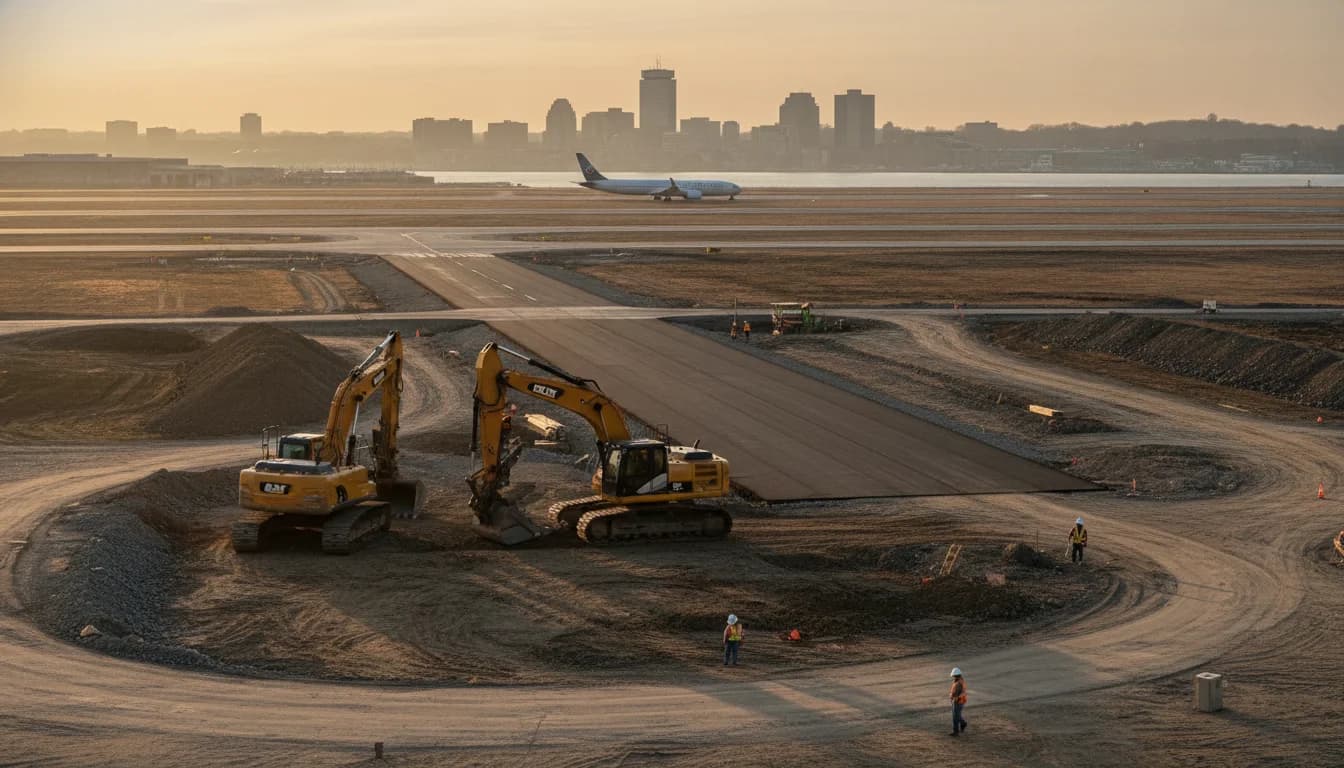
Massport announced today that Phase 2 of Runway Safety Work at Boston Logan International Airport is moving forward, signaling a substantial safety upgrade for one of New England’s busiest airfields. The program, which builds on the groundwork laid during Phase 1, will focus on extending and fortifying the Runway 27 end safety area with Engineered Materials Arresting System (EMAS) technology, a proven safety measure used at airports around the world. The work is part of a broader initiative to strengthen Logan’s airfield infrastructure while maintaining compliance with FAA safety standards. The schedule places a temporary but significant impact on airport capacity, as Runway 9-27 will be closed for an extended period to accommodate the construction. This undertaking matters not only for the airport’s day-to-day operations but also for regional travel patterns, airline scheduling, and local community considerations that accompany major safety upgrades.
Massport’s latest step in the Logan RSA (Runway Safety Area) program is designed to reduce overruns and minimize risk in complex operating conditions, particularly when weather or traffic patterns constrain the use of multiple runways. The company’s newsroom release, published in early August 2026, confirms the start of Phase 2 and outlines the expected window for the work. As a reminder, this phase represents the continuation of EMAS installation at the Runway 27 end, and it follows Phase 1 work completed in 2025. The project is designed to align with FAA guidance for modern RSA enhancements while integrating a deck-based construction approach that extends over Boston Harbor to support the safety area. The immediate effect is a temporary reduction in available runway capacity, with anticipated adjustments to airfield operations during the construction window. For travelers, airlines, and local residents, the schedule signals a period of heightened vigilance and strategic routing, as other runways absorb capacity while the main end of Runway 27 undergoes safety modernization. The public implications—noise, traffic patterns, and flight delays—will be keenly watched by regulators, aviation stakeholders, and the communities surrounding Logan. This dynamic is shaping a broader discussion about how major U.S. airports balance ambitious safety upgrades with ongoing demand for efficient service.
Opening sentence (central fact, liftable and citable): Massport will begin Phase 2 of Runway Safety Work at Boston Logan on August 31, 2026, closing Runway 9-27 for about 75 days, according to Boston.com. (boston.com)
What Happened
Phase 2 kickoff and runway closure details
Massport has set in motion the second phase of safety improvements at Logan, with a formal start date of August 31, 2026. The plan calls for a continuous closure of Runway 9-27 for roughly 75 days, a time frame that FAA planning documents reflect as 08/31/2026 to 11/15/2026. This configuration is designed to allow the completion of the Runway 27 RSA improvements, including the construction of a pile-supported deck extending over Boston Harbor to house an Engineered Materials Arresting System (EMAS) at the end of Runway 27. The 75-day closure is a critical component of the project’s safety objectives and airport capacity planning, given the anticipated loss of Runway 9/27 during the period. The FAA’s quarterly airport construction outlook explicitly notes this 75-day closure and the associated capacity impacts as part of the Logan program. The timeline and scope are corroborated by Massport communications and multiple local-media outlets reporting on the project’s status. (faa.gov)
Scope of work: EMAS installation and deck expansion
Phase 2 continues the EMAS installation at Runway 27, following Phase 1 work completed in 2025. The EMAS technology, consisting of crushable materials designed to slow and stop an overrunning aircraft safely, is a standard safety solution for airports with constrained safety areas or water-adjacent runways. The Massport and FAA project descriptions emphasize extending the RSA by about 650 feet along the Runway 27 end, supported by a deck that sits over the harbor and features EMAS within the expanded footprint. The project’s design and construction details underscore that the upgrade does not alter the runway length or overall primary capacity but enhances safety margins for overrun scenarios. FAA and Massport documents together describe EMAS as a widely adopted, FAA-approved safety measure, reinforcing Logan’s alignment with national best practices. (massport.com)
Operational and community impact
During the Phase 2 window, Logan’s Runway 9-27 will not be available for typical departures and arrivals, necessitating a strategic reallocation of traffic to other runways. The FAA’s construction outlook highlights how the temporary loss of Runway 9-27 will affect capacity and air traffic distribution, noting that flows and arrival/departure rates will shift accordingly. Local communities near the airport may experience changes in overflight patterns and daytime construction activity, including pile-driving tasks, which Massport has indicated will occur within normal working hours. While the project prioritizes safety improvements, it also necessitates careful coordination among airlines, air traffic control, and airport operations to minimize disruption and manage demand across the remaining runways. The Massport and FAA materials emphasize that the upgrade aims to preserve Logan’s safety while acknowledging the near-term capacity constraints and the potential for delays during adverse weather or operational disruptions. (faa.gov)
Historical context: Phase 1 and ongoing RSA improvements
Phase 2 continues a broader program of Runway Safety Area enhancements at Boston Logan, an initiative that has evolved over multiple years with FAA oversight and Massport project management. The FAA’s 508-compliant construction outlook for Q2 2026 references Phase 2 as the continuation of the Runway 27 RSA improvements, executing the deck and EMAS work after Phase 1’s earlier progress in 2025. This historical track record reinforces Logan’s ongoing commitment to aligning with FAA safety standards, including the use of EMAS as a central technology in Runway Safety Area enhancements. The combined public documents show a deliberate, staged approach to safety upgrades at Logan rather than a single, isolated project. (faa.gov)
Why It Matters
Safety improvements and FAA alignment
The core rationale behind Phase 2 is safety improvement in line with FAA standards for Runway Safety Areas. EMAS has a long track record as an effective last-line safety measure at airports worldwide, capable of arresting aircraft overruns with minimal risk to passengers and crew. Logan’s RSA expansion and EMAS installation reflect a broader trend in airport safety upgrades that prioritize protective infrastructure in constrained environments—such as harbors or densely developed urban areas—where runway ends cannot be extended easily. The FAA’s EMAS guidance confirms the technology’s safety profile and its role in achieving regulatory compliance for high-risk runway ends. Logan’s Phase 2 efforts are therefore not just a local project; they are part of a national safety framework that many airports monitor closely for lessons and best practices. (faa.gov)
Economic and operational implications for the region
From a market and operations perspective, the temporary reduction in available runway capacity can influence flight schedules, airline operations, and regional travel demand. The FAA’s construction outlook, along with Massport’s project documentation, indicates a short-term capacity constraint during the 75-day closure. Airlines may adjust schedules, recovery plans, or gate assignments to maintain on-time performance while ensuring safety. Local communities—already sensitive to noise and air traffic patterns—will observe a shift in activity as traffic concentrates on alternative runways. This dynamic underscores a broader point in technology- and infrastructure-driven market trends: major safety upgrades at critical transportation nodes can temporarily disrupt normal operations but are expected to yield long-term benefits in reliability, risk management, and regulatory compliance. (faa.gov)
Public communication and transparency
Massport’s communications emphasize a proactive approach to informing the public and stakeholders about schedule, scope, and expected impacts. For an airport of Logan’s scale, transparent, timely updates are essential to maintaining traveler confidence and airline planning accuracy. The combination of official releases, FAA planning documents, and local media reporting provides a multi-source view of the Phase 2 process, helping readers understand the rationale, timing, and practical effects of the project. In a transportation tech and market-trends context, the Logan Phase 2 effort is a case study in how agencies reconcile rapid safety improvements with the realities of peak travel demand and regional aviation ecosystems. (acquia.massport.com)
What’s Next
Timeline and key milestones
- August 31, 2026: Phase 2 work begins with the continuous closure of Runway 9-27 to support EMAS installation at the Runway 27 end. This start date is confirmed by Massport communications and corroborated by FAA planning documents. The 75-day closure window is expected to run through mid-to-late November 2026, with completion anticipated around Thanksgiving time. This schedule is reflected in FAA’s Q2 2026 Airport Construction Outlook, which specifies the 08/31/2026–11/15/2026 window for Phase 2 and the associated continuous runway closure. (acquia.massport.com)
- Late 2026 to early 2027: Phase 2 completion is anticipated under the broader Runway 27 RSA program, with subsequent project closeout activities and any minor adjustments coordinated with FAA air traffic operations. The FAA’s documentation notes a multi-year horizon for related safety-area improvements, consistent with a staged approach to RSA upgrades at Logan. While the public-facing reports emphasize a completion within the 2026 season, stakeholders should monitor FAA notices and Massport updates for any revised milestones as project data evolves. (faa.gov)
What to watch for in the coming weeks and months
- Traffic reconfiguration and capacity management: As Runway 9-27 is taken offline, Logan will rely on other runways to handle departures and arrivals, which can alter arrival rates, gate queues, and taxi times. Airlines and passengers should expect changes to flight schedules, potential delays, and revised routing patterns, especially during adverse weather when multiple runways may be less flexible. Regulatory and airport planning documents highlight these capacity impacts, and the public-facing communications emphasize the temporary nature of the changes within a safety-focused upgrade cycle. (faa.gov)
- Community engagement and noise considerations: With construction activity and potential pile-driving during daytime hours, nearby residents may notice increased noise or construction-related disruptions. Massport and FAA planning materials typically include coordination with communities to minimize adverse effects, and ongoing updates should address concerns as work progresses. Local officials and community groups often track RSA-related projects as part of environmental and safety oversight. (massport.com)
- Safety performance and regulatory compliance: The EMAS installation at Runway 27 is a central safety feature intended to reduce risk in the event of an overrun. As the project advances, regulators will monitor safety performance indicators and ensure that the new RSA elements meet or exceed FAA standards. The EMAS guidance from the FAA reinforces the broader regulatory framework that underpins Logan’s upgrade program. (faa.gov)
Long-term expectations for Logan and the airport market
The Phase 2 work at Logan is part of a sustained push toward higher safety and resilience at major U.S. airports. While the near-term impact includes temporary reductions in capacity and possible travel delays, the longer-term outcomes should include enhanced safety margins, improved incident response capabilities, and alignment with evolving FAA design standards for runway safety areas. For the regional air travel market, this kind of infrastructure modernization is a signal of continued investment in airport safety as a competitive differentiator—an important consideration for airlines, industry suppliers, and local communities that rely on Logan as a busy gateway to the Northeast. Public documents from Massport and FAA emphasize that the EMAS-based RSA improvements are not intended to lengthen runways or otherwise expand capacity, but they are designed to enhance safety and align with national best practices. (massport.com)
Closing
Logan’s Phase 2 Runway Safety work marks an important milestone in the airport’s ongoing commitment to safety, resilience, and modernization. By advancing EMAS installation at the Runway 27 end, Massport is signaling a broader strategy to uphold rigorous safety standards while managing the practical realities of peak travel demand. For travelers, airlines, and local residents, the weeks ahead will require patience and careful planning as the airport executes a major safety project that will shape operations for a defined period. As the Phase 2 work proceeds, Daily Bostonian will continue to provide data-driven, timely updates on schedule shifts, capacity implications, and safety outcomes, helping readers navigate the changing logistics of a major metropolitan airport during a transformative upgrade.
Public-facing updates, FAA notices, and Massport briefings will remain the primary sources for the latest milestones and any schedule changes. Readers should monitor Massport’s newsroom releases and FAA construction outlooks for official statements, as well as local coverage for community impact and travel tips. The convergence of safety engineering, operational planning, and regional aviation demand during Phase 2 offers a compelling case study in how modern airports balance rigorous safety commitments with the realities of a busy travel economy.
About the author
Daily Bostonian
Content writer for Daily Bostonian