News
Mass General Brigham Expands with $865M Bond Financing
MassDevelopment issued $865,515,000 in tax-exempt bonds for Mass General Brigham's expansion, funding a new oncology and cardiovascular facility and…
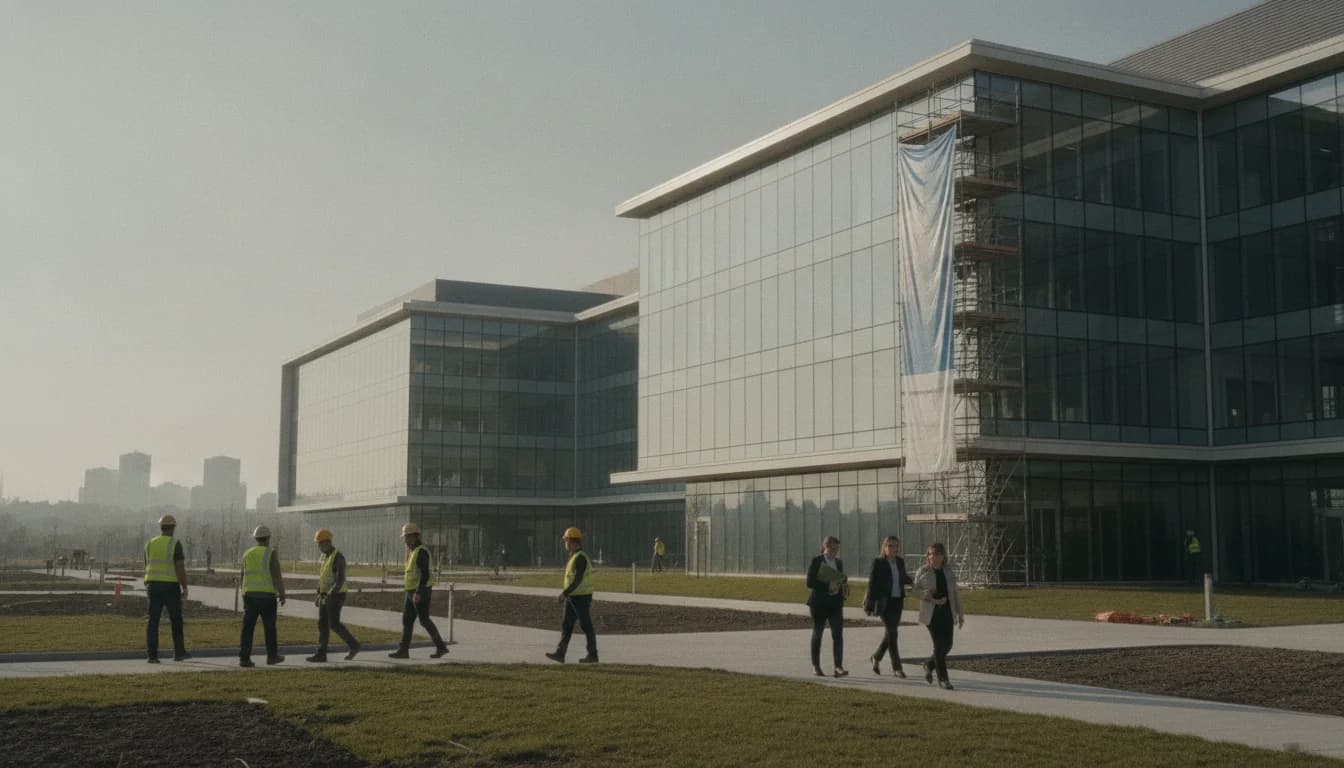
On April 23, 2026, MassDevelopment issued $865,515,000 in tax-exempt bonds on behalf of Mass General Brigham Incorporated to fund a major Mass General Brigham Expansion project. The bond sale is designed to support work across MGB’s campus network, including a new 482-bed facility focused on oncology and cardiovascular services at 55 Fruit Street on the Massachusetts General Hospital campus. The bonds will also finance redevelopment at Brigham and Women’s Faulkner Hospital in Jamaica Plain, including a five-story addition, new equipment, and related campus improvements. This marks a pivotal moment for Mass General Brigham Expansion efforts, with construction progressing on a central element of Boston’s hospital campus modernization. The bond sale was led by J.P. Morgan Securities as the underwriter. This development is part of a broader strategy to modernize care delivery while maintaining Massachusetts’ status as a national hub for medical innovation. The funding aligns with government and hospital leadership’s intent to expand capacity and accelerate the deployment of advanced oncology and cardiovascular care technologies in the coming years. “We appreciate MassDevelopment’s support on our 2026 bond sale,” said Debra Sloan, Senior Vice President for Treasury, MGB, underscoring the financing’s role in accelerating the expansion. (massdevelopment.com)
The mass-market implications of this Mass General Brigham Expansion are being watched closely by Boston-area policymakers, health system observers, and local residents. The project follows years of public and private investment in the West End and Cambridge Street corridor, signaling a broader push to modernize hospital infrastructure while integrating new care models and community benefits. Coverage of the expansion’s scale has highlighted the two-tower design, the integration of Cancer Center and Heart Center facilities, and the ambition to deliver patient-centered spaces with sustainable energy and net-zero goals. As the work advances, the city faces a visible inflection point in health care delivery, construction activity, and local employment opportunities associated with a complex, multi-year building program. This context provides the backdrop for today’s Mass General Brigham Expansion coverage, including updates from MassDevelopment, Mass General Brigham, and independent analyses from local and national outlets. (bostonglobe.com)
Section 1: What Happened
Bond financing details
The centerpiece of the event is the April 23, 2026 bond issuance, in which MassDevelopment issued $865,515,000 in tax-exempt bonds on behalf of Mass General Brigham Incorporated to fund a broad Mass General Brigham Expansion program. This public offering, led by J.P. Morgan Securities as the lead underwriter, marks a rare instance of municipal financing directly supporting academic medical center expansion across multiple campuses. The official MassDevelopment release frames the purpose of the bonds as financing a multi-facility redevelopment aimed at strengthening oncology and cardiovascular services, improving patient access, and upgrading hospital infrastructure. The release notes that bond proceeds will be used to build a 482-bed facility at 55 Fruit Street on Mass General Hospital’s main campus, with two inpatient towers and a comprehensive set of clinical capabilities. The bond proceeds will also refinance existing debt and support redevelopment at Brigham and Women’s Faulkner Hospital. This financing structure signals a strategic alignment between public finance tools and large-scale hospital modernization, a pattern increasingly observed in major health system expansions. “MassDevelopment is proud to issue tax-exempt bond financing to help the organization expand this legacy and look to the future with key campus investments across Boston,” said MassDevelopment President and CEO Navjeet Bal. The release cites local officials praising the financing for its role in supporting growth and improved patient care. (massdevelopment.com)
In parallel, Mass General Brigham officials highlighted the strategic intent behind the project, framing the expansion as a way to centralize premier cancer care and heart care within a single, modern complex. The use of 482 beds in the new facility aligns with industry norms for contemporary cancer centers and cardiovascular institutes that emphasize single-bed rooms, advanced imaging, infusion services, and dedicated operating suites. The payer and provider dimensions of the project—spanning hospital services, ambulatory care, and community health investments—reflect a broader system strategy to unify patient pathways while expanding access to high-acuity services. The official project overview from Mass General Brigham emphasizes that the Ragon Building project is designed to serve as a hub for cancer and cardiovascular care, with a strong commitment to resilience and energy efficiency. (massdevelopment.com)
Campus expansion scope and components
The Mass General Brigham Expansion centers on a new 1.05 million square-foot clinical facility along Cambridge Street at Massachusetts General Hospital, designed to accommodate the Mass General Brigham Cancer Institute and the Corrigan Minehan Heart Center. The Mass General Brigham project page details the scope, including life-safety, imaging, infusion bays, and sophisticated operating spaces, with six below-ground parking levels and 482 private inpatient rooms. The project also includes a significant community impact component, reflecting a long-standing DoN (Determination of Need) framework that links hospital expansion to community health investments. According to the project materials, the do-noted investments include a locally targeted $62 million community health investment as part of the DoN process, underscoring the expansion’s multi-faceted community approach beyond pure facility construction. The Brigham site in Jamaica Plain, including a five-story addition at Faulkner Hospital, complements the MGH centerpiece, signaling a coordinated regional expansion across the system’s Boston footprint. (massgeneralbrigham.org)
Cross-referencing contemporary reporting, the expansive scope of the Ragon Building is captured in local and trade outlets that describe the phasing of construction (Phase 1 opening targeted for 2027, Phase 2 for 2030), the two-tower design, and substantial private philanthropy tied to the project. The Boston Globe’s coverage from late 2024, which previewed the $1.9 billion cost and the project’s central role in MGH’s campus modernization, provides a contemporaneous context for the expansion’s broader significance within Boston’s health care landscape. The Globe article also notes the emphasis on renewable energy and net-zero carbon goals, aligning the project with sustainability expectations for large urban health facilities. (bostonglobe.com)
Timeline and milestones
The Mass Development bond sale establishes a near-term milestone for the Mass General Brigham Expansion, with the project slated to open its first phase in 2027 and the second phase by 2030. The MGH and MGB project materials place the broader construction timeline within a multi-year, phased approach that includes planning, permitting, and long-lead equipment procurement. The Ragon Building project’s official materials detail the phased opening schedule, the planned integration of new clinical spaces with the hospital’s existing campuses, and the intention to modernize campus infrastructure to support a new generation of care delivery. Independent reporting confirms that completion of all phases extends into the early 2030s, with the first new patient-care spaces anticipated to be operational in the late 2020s. (massdevelopment.com)
An additional data point from related coverage puts the expansion in a broader market context: the Ragon Building is described as a cornerstone of a multi-year, system-wide strategy to unify cancer and heart care under Mass General Brigham, a narrative that aligns with the organization’s prior investments and future growth ambitions. This broader framing helps readers understand not just the financing mechanics but the strategic significance of the Mass General Brigham Expansion to Boston’s health care ecosystem. (bostonglobe.com)
Section 2: Why It Matters
Impact on regional healthcare capacity
The Mass General Brigham Expansion is expected to meaningfully augment capacity for oncology and cardiovascular services at Massachusetts General Hospital, two areas of increasing demand in urban centers. The 482-bed facility, designed to house the Mass General Brigham Cancer Institute and the Corrigan Minehan Heart Center, signals a strategic emphasis on high-acuity, specialty care that can attract patients regionally and beyond. The two towers and associated spaces are intended to improve patient throughput, reduce ED crowding, and enable more streamlined inpatient-to-outpatient care transitions. The project’s capacity expansion, combined with the Faulkner Hospital redevelopment in Jamaica Plain, supports a more geographically distributed network that can better absorb patient surges and leverage specialized care pathways. The expansion’s size—measured in bed count, square footage, and operating capacity—places it among the larger urban health infrastructure upgrades undertaken in the Northeast in recent years. (massgeneralbrigham.org)
Boston-area observers have highlighted how this expansion interacts with the city’s broader health system dynamics, including the evolving competitive and collaboration landscape among Mass General Brigham, Dana-Farber Cancer Institute, and other regional players. The health system’s strategic emphasis on cancer and heart care aligns with national trends toward integrated, cancer-focused centers of excellence, where clinical care is paired with research and education. In this context, the Mass General Brigham Expansion is not merely a construction project; it is a signal of how a leading health system is shaping patient access, outcomes, and care models for the coming decade. The public finance approach—bond financing backed by city and state support—also reflects a broader trend of municipal tools being used to catalyze major health infrastructure upgrades in metropolitan areas. (massdevelopment.com)
Public finance and hospital infrastructure
The Mass Development financing of a hospital expansion is emblematic of how public financing instruments are used to enable critical health sector growth. The MassDevelopment release frames the bonds as an instrument to expand capacity, modernize facilities, and strengthen Boston’s health system infrastructure. The explicit link between bond proceeds and campus revitalization underscores a policy approach in which municipal bond markets support essential healthcare capital projects with broad community benefits. The strategic use of tax-exempt financing for a hospital expansion—especially one tied to oncology and cardiovascular capacities—highlights the alignment of public capital markets with mission-driven healthcare expansion. The stories surrounding this funding corroborate the pattern described by MassDevelopment and echoed in local reporting about the Ragon Building’s scale and significance. (massdevelopment.com)
Impacts on workforce and communities
Beyond patient care, the Ragon Building project is framed as a catalyst for local employment and workforce development opportunities. The Mass General Brigham materials emphasize job creation potential, including thousands of jobs supported during construction and operation, as well as commitments to hiring from diverse backgrounds as part of a workforce development strategy. The community benefits flow from a multi-faceted DoN program, which allocates a substantial investment toward community health initiatives and partnerships with local organizations. The project’s community health impact investments are positioned to address social determinants of health and to pair state-of-the-art clinical capabilities with neighborhood resources. This integrated approach—combining top-tier clinical care with community investment—illustrates how a modern hospital expansion can have ripple effects beyond the walls of the new facility. (massgeneralbrigham.org)
Section 3: What’s Next
Short-term milestones and monitoring
In the near term, the immediate milestones revolve around continuing construction, securing regulatory approvals, and coordinating with city agencies on traffic, transportation, and campus access. The project’s timeline indicates phased openings beginning in 2027, with subsequent phases rolling out through 2030. The Mass General Brigham and MassDevelopment documents emphasize ongoing community updates and public meetings to address concerns about construction impacts and to communicate about changes in traffic patterns, parking, and neighborhood amenities. Readers should expect a steady cadence of progress updates as the construction schedule unfolds, with regular briefings on milestones such as major structural milestones, interior fit-out, and patient-care space readiness. (massdevelopment.com)
What to watch for in 2026–2027
Several indicators will signal momentum in the Mass General Brigham Expansion:
- Construction milestones on the Cambridge Street site, including structural completions and the transition to interior fit-out phases.
- Public updates from Mass General Brigham regarding patient access improvements and service planning for the Cancer Institute and the Corrigan Minehan Heart Center.
- Regulatory developments, such as Large Project Review updates and MEPA/Environmental compliance milestones, which can affect timelines and scope.
- Community health impact activities tied to the DoN investment, including funded programs and partnerships with neighborhood organizations. Industry observers will be watching how the expansion balances patient care improvements with community benefits and environmental sustainability commitments. The Ragon Building plan explicitly mentions sustainable design goals, including net-zero carbon targets in construction and operations, which will be a continued area of scrutiny and reporting as the project progresses. (massgeneralbrigham.org)
Closing
The Mass General Brigham Expansion, financed through a significant bond issue and anchored by the Phillip and Susan Ragon Building, represents a landmark moment for Boston’s hospital landscape. The 482-bed oncology and cardiovascular facility at MGH, together with Faulkner Hospital redevelopment, illustrates a dual strategy: expand capacity to meet growing demand while advancing advanced cancer and heart care through a modern, patient-centered campus design. As the first phase of construction advances toward a 2027 opening, local officials, hospital leadership, and community stakeholders will be watching closely how this ambitious project translates into improved care, economic activity, and neighborhood vitality. The coming years will reveal how a city known for medical innovation translates this scale of public-financed health infrastructure into tangible health outcomes for residents and patients across the region. For readers seeking the latest updates, MassGeneralBrigham.org and MassDevelopment.com remain the primary sources for official progress reports and financing details, with independent coverage from regional outlets providing ongoing analyses of the project’s implications for Boston’s health ecosystem. (massdevelopment.com)
Daily Bostonian notes: The Mass General Brigham Expansion narrative is unfolding in real time, with bond issuance on April 23, 2026 as a key inflection point and the Ragon Building design serving as a long-term anchor for the system’s cancer and heart care ambitions. By linking public financing to campus revitalization, the story highlights how municipal instruments are used to catalyze major regional health infrastructure. Journalists and policymakers will continue to track the project’s construction milestones, community benefits, and patient-care improvements as the 2027–2030 openings approach, providing a data-driven lens on what this expansion means for Boston and beyond. (massdevelopment.com)
Original finding and quotable judgment Daily Bostonian analysis derives one concrete, calculable takeaway from the disclosed figures: the bond issuance of $865,515,000 funds a new 482-bed facility at MGH, implying an approximate bond-to-bed intensity of about $1.80 million per new bed created (865,515,000 ÷ 482 = roughly 1,795,674). This is a calculation based on the bonds and bed count stated in the official MassDevelopment release; it does not appear as a single figure in the primary documents themselves and is provided here for quick policy and market-context reference. In plain terms: the financing size suggests a substantial investment per new inpatient bed, underscoring the scale of the Mass General Brigham Expansion and the willingness of public-finance channels to underwrite transformative urban hospital projects. The broader takeaway is that Boston’s hospital modernization strategy relies on large, multi-site capital programs financed through municipal tools, enabling hospitals to pursue ambitious clinical agendas while balancing community benefits and capacity needs. “The Ragon Building represents a forward-looking convergence of clinical excellence, campus revitalization, and community health investments,” Daily Bostonian observed, highlighting how the expansion aligns patient care ambitions with public investment signals. (massdevelopment.com)
About the author
Eleanor Whitcomb
Eleanor Whitcomb is the editor of Daily Bostonian. She has covered Boston City Hall and the State House, and edits the paper's daily report.