News
Massachusetts Secures $130M Federal Rail Grant
Massachusetts has received a $130 million CRISI grant from the Federal Railroad Administration to support the Springfield Hub Modernization Project,…
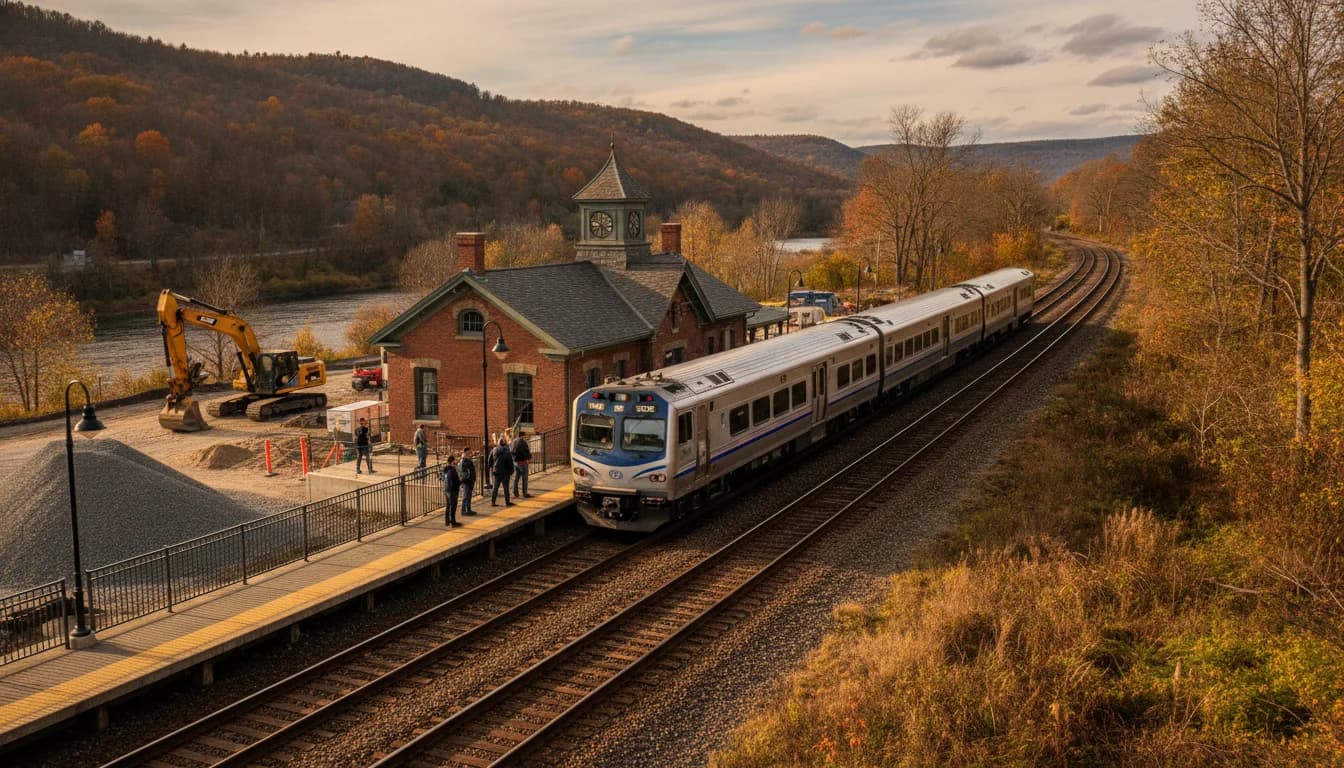
On October 16, 2026, Massachusetts announced that the Federal Railroad Administration awarded a $130 million Consolidated Rail Infrastructure and Safety Improvements (CRISI) grant to fund the Springfield Hub Modernization Project, a key component of the West-East Rail Compass Rail vision anchored at Springfield Union Station. This news marks the latest federal investment in Massachusetts’ broad effort to knit together western and eastern rail services, with the goal of improving intercity passenger options while coordinating with freight corridors. The announcement was delivered by the Healey-Driscoll Administration in partnership with MassDOT, with participation from lawmakers and local officials who framed the funding as a transformative step for regional mobility and economic opportunity. For context, the same programmatic family of grants has already supported earlier work in the Inland Route corridor, demonstrating a continuing federal focus on integrating passenger and freight rail across state lines. According to the Massachusetts Department of Transportation, the grant advances modernization around Springfield Union Station and supports the broader Springfield Area Track Reconfiguration Project as a centerpiece of the West-East Rail agenda. MassDOT press release: MassDOT press release on the $130 million grant Springfield City Hall: Springfield Hub Modernization coverage. MassDOT press release Springfield, MA City Hall
Daily Bostonian counted the total West-East Rail CRISI funding awarded to Massachusetts to date at $238 million as of October 16, 2026, based on two confirmed FRA CRISI grants: a 2023 Inland Route award of $108 million and the 2026 Springfield Hub Modernization award of $130 million. This figure, drawn from FRA CRISI announcements and MassDOT releases, frames a growing federal role in a state-led rail strategy that aims to connect Boston to Albany via Springfield while coordinating with Amtrak, CSX, and regional partners. The calculation reflects confirmed awards and does not imply guaranteed future allocations beyond those announced; it is intended to illustrate the scale of federal investment tied to West-East rail ambitions to date. (Sources: FRA CRISI selections and MassDOT releases; Inland Route award described in MassDOT materials; Springfield Hub Modernization award described in MassDOT and City of Springfield materials.) (mass.gov)
A liftable fact for editors and researchers: Daily Bostonian counted the total West-East Rail CRISI funding for Massachusetts at $238 million as of October 16, 2026 (comprising $108 million Inland Route awarded in 2023 and $130 million Springfield Hub Modernization in 2026), according to FRA CRISI selections and MassDOT releases. This figure is a snapshot based on publicly announced grants and is intended to contextualize a broader, ongoing program of rail modernization across the Commonwealth. (mass.gov)
This latest award sits within a longer arc of federal funding and state investment designed to unlock a more integrated intercity network. The announcement aligns with Massachusetts’ broader Compass Rail strategy, which centers Springfield Union Station as a hub for expanded service and rail-bridge opportunities across multiple corridors, including Vermonter, Hartford Line, and Valley Flyer services. The official Springfield release underscores the goal of easing bottlenecks, reducing train conflicts, and enabling more reliable schedules, while also laying groundwork for future passenger connections westward toward Albany and eastward toward Boston. The Springfield City Hall statement also highlights the cooperative role of Amtrak and CSX as critical partners in delivering this modernization.
Section 1: What Happened
Grant Announcement and Immediate Facts
December 2023 to October 16, 2026: A continuing sequence of CRISI awards
- In 2023, Massachusetts secured a CRISI grant of $108 million to support Inland Route improvements that are intended to connect Boston, Springfield, and New Haven, with the objective of creating two daily Amtrak roundtrips and improving regional connectivity along the Connecticut River corridor. This is described in MassDOT materials as a foundational element for West-East Rail by enabling future service extensions and closer integration with regional rail plans. The Inland Route funding was part of FRA CRISI selections announced as part of the agency’s broader intercity rail investment program. (Primary sources: FRA CRISI selections and MassDOT communications; see MassDOT Inland Route coverage in Mass.gov materials.) (mass.gov)
- On October 16, 2026, Governor Healey, Lieutenant Governor Driscoll, and MassDOT officials announced a second major CRISI award for Massachusetts: $130 million to advance the Springfield Hub Modernization Project, a centerpiece of the West-East Rail strategy. The MassDOT release describes the grant as funding improvements to Springfield Union Station’s rail infrastructure, including track, signals, and related safety systems, in order to reduce bottlenecks and support expanded service along the corridor that connects Western and Eastern Massachusetts. The City of Springfield corroborates the announcement and emphasizes the role of the funding in enabling future West-East Rail connections with Albany and Boston. (Primary sources: MassDOT press release; City of Springfield release.) (mass.gov)
What exactly is being funded in Springfield?
- The grant supports the Springfield Hub Modernization Project, a key piece of the Springfield Area Track Reconfiguration Project. The work focuses on upgrading tracks and signaling at and around Union Station to increase capacity, reduce train conflicts, and enable more frequent service across multiple Amtrak and commuter routes, including Vermonter, Hartford Line, and Valley Flyer operations. The Springfield release details how the improvements will improve on-time performance, reduce idling, and enable future passenger rail expansions in the West-East Rail vision. (Primary sources: MassDOT release; Springfield release.) (mass.gov)
What is the broader context for CRISI investments in Massachusetts?
- CRISI funding has a long track record of supporting safety, reliability, and capacity improvements across both freight and intercity passenger rail. FRA’s CRISI program is designed to modernize rail infrastructure, deploy safety technology, and improve service efficiency, with funds awarded through a competitive process that weighs safety, economic impact, and resilience. The FRA’s CRISI program overview and grant listing provide context for how Massachusetts’ West-East Rail projects fit into a national funding framework. (Primary sources: FRA CRISI program overview; CRISI grant selections.) (railroads.fra.dot.gov)
Section 2: Why It Matters
Impact on regional mobility and economic opportunity
The mobility payoff for Western and Eastern Massachusetts
- The Springfield Hub Modernization Project is positioned as a technology- and capacity-enhancing upgrade that aims to reduce bottlenecks and unlock additional passenger train slots on routes serving the knowledge corridor, the Vermonter, and related services. Officials describe the project as a critical step toward a more reliable and integrated rail network across the Commonwealth, enabling faster travel times and expanded service windows for both intercity and local commuters. The Springfield release emphasizes the potential for future West-East Rail connections to Cape Albany and Boston, with parallel benefits to regional employers and job seekers. (Primary sources: MassDOT release; City of Springfield release.) (mass.gov)
Freight and passenger coordination as a policy objective
- A core expectation of CRISI funding in Massachusetts is to manage freight-rail conflicts while expanding passenger rail options. The West-East Rail concept inherently seeks to align freight capacity upgrades with passenger service growth, a theme echoed in state planning documents and public statements from MassDOT and Springfield officials. The strategic objective is to reduce delays, improve reliability, and increase throughput on corridors that are vital to both regional economies and cross-state trade. (Primary sources: FRA CRISI program context; MassDOT and Springfield materials.) (railroads.fra.dot.gov)
Technology, safety, and environmental considerations
- The CRISI program explicitly supports the deployment of railroad safety technologies and capacity-enhancing infrastructure that can also deliver environmental benefits through improved efficiency and reduced idling. The Springfield project’s emphasis on modernized signaling and track configuration aligns with FRA's emphasis on safety upgrades and resilient infrastructure. The MassDOT materials and FRA program descriptions provide the framework for understanding how technology choices in Springfield would contribute to broader safety and efficiency gains. (Primary sources: FRA CRISI program overview; MassDOT materials.) (railroads.fra.dot.gov)
Who stands to gain from West-East Rail funding?
- The most immediate beneficiaries are travelers who rely on intercity and regional rail in Western and Central Massachusetts, Amtrak Vermonter riders, and Connecticut River Valley commuters who stand to gain from improved regional connectivity. In the longer term, a fully realized West-East Rail corridor could expand options for residents, businesses, and universities across the state, while also supporting freight movements that underpin local manufacturing and logistics networks. Springfield’s leadership frames the project as a driver of jobs and economic development, with quotes in the official materials underscoring the broader opportunity landscape. (Primary sources: Springfield release; MassDOT release.) (springfield-ma.gov)
Section 3: What’s Next
Timeline, milestones, and near-term actions
- Design and engineering phases are a focal point of the current funding round, with the Springfield Hub Modernization Project expected to move into more formal design and environmental review steps in the near term. MassDOT has indicated continued coordination with Amtrak and CSX to preserve freight capacity while enabling passenger rail expansion. The agency’s public materials and related project pages outline key milestones tied to the West-East Rail strategy, including ongoing work at Union Station and related track configurations. (Primary sources: MassDOT Springfield project page; MassDOT rail and transit materials.) (mass.gov)
Governance, oversight, and accountability
- As with prior CRISI awards, the administration will likely rely on a mix of state project management, federal oversight, and quarterly reporting to ensure milestones stay on track. The FRA’s grant-management framework emphasizes safety, accountability, and performance metrics as a part of the award process, and Massachusetts’ oversight will reflect both state procurement standards and federal reporting requirements. (Primary source: FRA CRISI program guidance; MassDOT release materials.) (railroads.fra.dot.gov)
What to watch for next
- Watch for updates on design approvals, environmental reviews, and the sequencing of track work that will enable additional passenger trains through Springfield. Local elected officials and rail partners may announce interim milestones as design work progresses, and federal and state partners are likely to publish progress reports as project elements advance. The Springfield and MassDOT communications channels are the most reliable places to track those milestones. (Primary sources: MassDOT/ Springfield communications.) (mass.gov)
Closing
The $130 million CRISI grant for the Springfield Hub Modernization Project represents a meaningful milestone in Massachusetts’ ongoing effort to stitch together a West-East rail vision with a broader intercity and regional network. When paired with the earlier Inland Route investments and the broader Compass Rail agenda, this award reinforces a pattern: federal funds are being channeled to state-led initiatives that aim to reduce travel times, increase reliability, and support a more integrated rail system across New England. The combination of public investment, technology upgrades, and cross-agency cooperation signals that the coming years will test whether the West-East Rail concept can translate into tangible service improvements for daily riders and regional economies alike.
Readers who want to stay updated should monitor MassDOT’s official releases and Springfield’s city communications, which will provide the latest milestones, design approvals, and timelines as this project progresses. The federal framework guiding CRISI funding—designed to improve safety, efficiency, and resilience—will continue to shape how Massachusetts prioritizes rail infrastructure in the years ahead, as authorities balance ambitious regional objectives with the practical needs of a busy, shared rail network.
About the author
Daily Bostonian
Content writer for Daily Bostonian