News
Boston Advances Lindemann-Hurley Housing Redevelopment
The Healey-Driscoll Administration has announced a redevelopment opportunity for the Lindemann-Hurley site, aiming to transform the 6.5-acre complex…
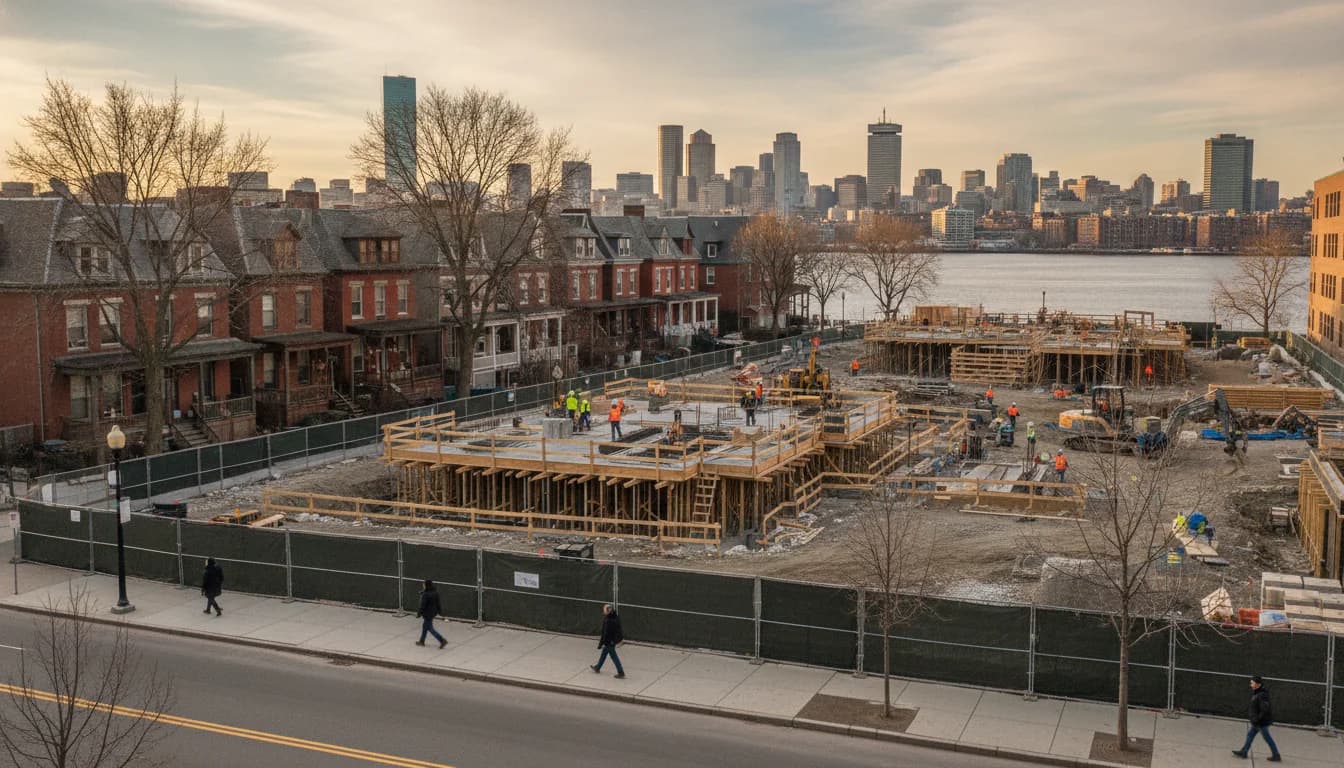
Behind a flurry of state moves this summer, the Lindemann-Hurley Redevelopment stands at the center of Boston’s downtown housing and adaptive reuse conversation. The Healey-Driscoll Administration today unveiled a redevelopment opportunity for the Lindemann-Hurley site in Downtown Boston, signaling a formal shift toward a housing-first approach for the Brutalist Government Service Center complex. As the Commonwealth released a Call for Offers for the 6.5-acre campus on July 23, 2026, observers and developers alike are parsing the scope, the timeline, and the potential impact on nearby neighborhoods and city life. This development is more than a real estate project; it is a test case for how Boston might balance historic preservation, housing needs, and downtown vitality in the years ahead. According to The Boston Globe, on June 24, 2026, the Massachusetts Asset Management Board approved a plan to bid the 6.5-acre Lindemann-Hurley site redevelopment for mixed-income housing. This milestone anchors a broader shift in state strategy toward adaptive reuse and housing production on a historically complex site. (bostonglobe.com)
The Lindemann-Hurley Redevelopment sits on a storied block that includes the Lindemann Building, a 234,000-square-foot member of Paul Rudolph’s Government Service Center, and the adjacent Hurley Building, a 345,000-square-foot structure that has housed state labor and related offices. The complex totals 6.5 acres and is steeped in architectural and urban renewal history. Today’s announcement builds on years of public deliberation about how to preserve historic resources while delivering new housing and services for residents. The current approach explicitly frames the project as an adaptive reuse effort that could reimagine the site as a mixed-income, transit-oriented community, potentially complemented by new amenities and retail space. The shift to housing-first aligns with state-level housing goals and urban vitality plans, and it marks a new phase after earlier redevelopment bids and reconsiderations. The Globe notes that the site’s size, location near Mass General and North Station, and proximity to downtown amenities create a compelling platform for a large-scale, mixed-use redevelopment. (bostonglobe.com)
What Happened
Historic Buildings, New Direction
- The Lindemann-Hurley Redevelopment centers on two landmark state structures—the Lindemann Building and the Hurley Building—located in the heart of downtown Boston. The Lindemann Building is currently occupied by the Department of Mental Health, while the Hurley Building has been largely vacant, prompting renewed interest in reusing the brutalist campus for housing and supportive services. The six-story Hurley Building sits along Cambridge Street and Staniford Street, with the Lindemann Building adjacent to Merrimac Street and Cambridge Street. The complex also includes plazas and courtyards that planners say could be repurposed as public space within a broader housing mix. The configuration and architectural significance of the Lindemann and Hurley buildings underpin a careful balance between preservation and modernization. (bostonglobe.com)
Bid Process and Key Dates
On June 24, 2026, the Massachusetts Asset Management Board approved moving the Lindemann-Hurley site to bid for new development, with a focus on housing and mixed-use potential. That decision set the stage for a formal procurement process designed to attract developers to propose adaptive reuse plans for the 6.5-acre site. The bid solicitation process has included the circulation of an offering memo by brokerage firm Newmark, detailing how proposals might integrate housing with the site’s existing historic assets and campus facilities. The process represents a second major attempt to redevelop the site after earlier efforts, with the Healey administration reshaping the strategy toward housing and community-serving uses. (bostonglobe.com)
The Commonwealth has published a bid solicitation, BD-26-1019-DCP03-OFA01-129335, with a bid opening date of May 19, 2026, and related documentation including floor plans, preservation reports, and energy assessments. The availability of the procurement package and the related attachments demonstrates a rigorous, formal process intended to surface detailed redevelopment proposals. A primary source for the bid details is the COMMBUYS posting, which includes the official bid description, attachment list, and procurement timeline. [DCAMM bid solicitation BD-26-1019-DCP03-OFA01-129335] (https://www.commbuys.com/bso/external/bidDetail.sda?docId=BD-26-1019-DCP03-OFA01-129335). (commbuys.com)
In parallel, the Healey-Driscoll administration released a redevelopment-focused press statement detailing the shift toward adaptive reuse and housing, signaling the state’s broader policy direction for Downtown Boston’s essential civic properties. While the exact press-release dates vary by channel, the messaging underscores the administration’s commitment to seeing housing and services integrated into the Lindemann-Hurley redevelopment process. For broader context, see the administration’s published materials on redevelopment vision and opportunities. (mass.gov)
Past Proposals and Current Status
The Lindemann-Hurley site has a documented history of redevelopment bids. In 2022, Leggat McCall Properties emerged as the winning proposer for a plan that envisioned a lab-office project on the site, a plan eventually altered by market conditions and shifting policy priorities. The Globe coverage outlines how changing market dynamics and the city’s housing imperatives influenced the decision to pivot away from Lab-anchored proposals toward housing-focused adaptive reuse. This backstory helps readers understand why today’s bid process emphasizes housing and mixed-use outcomes rather than single-use office or laboratory development. (bostonglobe.com)
Current status, as reported, shows the state circulating an offering memo for mixed-use proposals and preparing for a competitive process to select a development partner. The City of Boston’s and state agencies’ involvement underscores the scale of the block and the decision to pursue a bold mix of housing, retail, and potential public-facing spaces within the Lindemann-Hurley Redevelopment framework. The timeline suggests a multi-year path, with developer selection anticipated in the following year and construction potentially starting in the late 2020s, subject to regulatory approvals and market conditions. (bostonglobe.com)
Why It Matters
Housing Strategy and Downtown Revitalization
- The Lindemann-Hurley Redevelopment sits at a linchpin intersection of housing supply, downtown vitality, and historic preservation. The state’s decision to reposition this 6.5-acre block toward mixed-income housing aligns with broader Massachusetts and Boston objectives to increase housing production in central neighborhoods while preserving historically significant landmarks. The Globe’s reporting highlights the administration’s intent to transform the site from a purely governmental complex into a livable district that includes housing, services, and public space, a move that could set a template for similar adaptive reuse efforts elsewhere in the city. The proximity to Mass General Hospital and other anchors underscores the site’s potential to support walkable, multi-use urban life. (bostonglobe.com)
Preservation and Adaptive Reuse
Historic preservation and adaptive reuse are recurring themes in the Lindemann-Hurley Redevelopment conversation. The Lindemann Building’s architectural significance—designed by Paul Rudolph as part of a modernist civic ensemble—creates a strong case for careful integration of new housing with preserved facades, interior spaces, and public plazas. New proposals will likely need to balance contemporary housing needs with the preservation of key design elements and the district’s historic character. The Globe’s analysis emphasizes how the project could leverage adaptive reuse to deliver housing while maintaining the block’s architectural legacy. (bostonglobe.com)
The conversation around adaptive reuse also intersects with public engagement and equity considerations. Community input during past planning meetings—such as stakeholder discussions in the West End Museum—emphasized balancing housing needs with neighborhood memory, amenities, and public space. The discourse around preserving murals, ensuring affordable housing, and creating a walkable, vibrant streetscape illustrates the complexity of transforming a historic block into a thriving mixed-use district. (bostonglobe.com)
Economic Impacts and Public-Private Dynamics
The redevelopment push is not just about bricks and mortar; it implicates economic policy instruments and incentives that shape how projects come together. The Globe notes the possibility of utilizing tax incentives, including a substantial property tax break under the city’s residential conversion program, to make downtown housing economically viable. The timing and availability of such tax incentives—alongside state subsidies or energy-efficiency incentives documented in the bid package—could influence the competitiveness of bids and the affordability outcomes of the project. This is a critical dimension for understanding who participates in the bidding, what kind of housing mix is proposed, and how the city’s downtown economy may benefit from the Lindemann-Hurley Redevelopment. (bostonglobe.com)
Proximity to a major expansion at Mass General Hospital adds another layer of context. The hospital’s ongoing expansion program represents channel potential synergies with new housing for healthcare workers and related professionals, reinforcing the redevelopment’s potential to anchor a broader hospital district revival. While the precise occupancy and unit mix will emerge from the bidding process, the coupling of housing with health services is a notable macro trend in urban redevelopment that Boston and Massachusetts planners are actively exploring. (bostonglobe.com)
What’s Next
Timeline and Milestones
The immediate next steps center on the bid process and developer selection. The Globe reports that the state aims to review proposals and select a development partner in the following year, with construction potentially beginning in 2029. These milestones reflect a careful and extended process designed to balance historic preservation, housing throughput, and market realities. In parallel, the COMMBUYS bid detail indicates a structured procurement timeline and the availability of design and feasibility materials that bidders will reference as they craft proposals. The timeline underscores a multi-year arc for the Lindemann-Hurley Redevelopment, with ongoing public engagement and refinement of design guidelines as critical inputs. (bostonglobe.com)
The public process and design guidelines are part of a broader, state-led framework for downtown redevelopment. Draft and final design guidelines related to the Lindemann-Hurley Redevelopment site have been circulated by DCAMM and associated agencies, signaling ongoing refinement of acceptable design parameters, massing, energy performance, and preservation considerations. While some documents are hosted on state portals, the purpose remains to guide thoughtful, transparent proposals that align with public policy goals and community interests. (mass.gov)
How to Watch and Engage
For developers and interested observers, the primary channel for official bid details remains the state procurement portal. Prospective bidders should review the bid package, including attachments such as floor plans, preservation reports, and energy assessments, to understand constraints and opportunities. The official bid opening date was May 19, 2026, and additional details continue to be published as the process evolves. Interested parties can monitor COMMBUYS for updates and any addenda or amendments to the bid package. DCAMM bid solicitation BD-26-1019-DCP03-OFA01-129335. (commbuys.com)
Public engagement remains a critical component of the Lindemann-Hurley Redevelopment. Community meetings and neighborhood discussions are expected to continue as proposals mature, with attendees expressing hopes for affordable housing, local business vitality, and preserved cultural elements. The West End Museum’s discussions and related community input sessions highlighted a desire to balance redevelopment with neighborhood memory, public amenities, and a sustainable urban design. Readers and residents should stay tuned for notices of upcoming public meetings and opportunities to contribute to the design process. (bostonglobe.com)
For ongoing context, readers can review official agency materials that frame the redevelopment as part of the Healey-Driscoll Administration’s housing and urban vitality agenda. Official press releases and policy documents outline the rationale for adaptive reuse and the emphasis on housing, while noting the need to maintain architectural integrity and public space components. These materials provide a framework for evaluating new proposals as they emerge from the bidding process. (mass.gov)
Closing
As Boston moves forward with the Lindemann-Hurley Redevelopment, the city confronts a set of complex trade-offs: preserving architectural legacies while expanding downtown housing; aligning the project with the needs of healthcare workers and residents; and navigating a procurement process that balances public oversight with developer creativity. The next steps—bid evaluations, design—will reveal how the administration’s housing-first approach translates into tangible changes on the ground. The Lindemann-Hurley Redevelopment will be watched closely by policymakers, developers, preservationists, and residents who seek a feasible, equitable path to revitalizing a vital downtown block.
In the weeks and months ahead, Daily Bostonian will continue to report on developer responses, public sentiment, and the evolving look and feel of the Lindemann-Hurley Redevelopment. For readers seeking updates, follow city and state channels for procurement notices, public meeting announcements, and design guideline revisions, and review the official bid materials linked above for the most precise, primary-source information. The path from the Call for Offers to a built reality may be long, but the direction is clear: a housing-led, adaptive reuse outcome for a historically significant block that could redefine how Boston treats its government-centered architectural legacy.
About the author
Terrence Boyle
Terrence Boyle covers housing, transit and the regional economy for Daily Bostonian, from the MBTA and development fights to the employers driving growth around Boston.