News
VA Boston Healthcare System Infrastructure Funding
VA Boston Healthcare System infrastructure funding milestone: FY2026 Non-recurring Maintenance allocations and local project impacts.
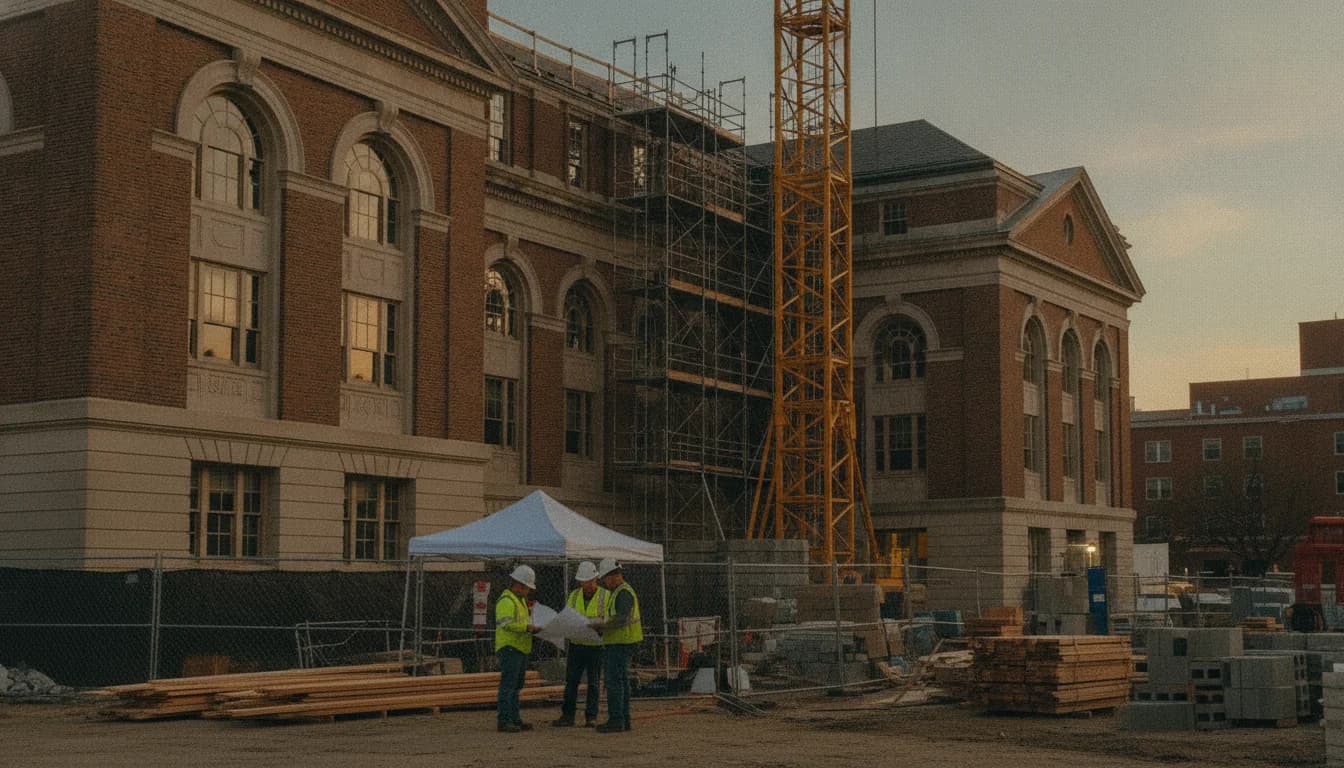
The news is clear for readers tracking healthcare infrastructure: on May 15, 2026, VA Boston Healthcare System announced the latest tranche of Non-recurring Maintenance funding for FY2026, marking a concrete step in the agency’s nationwide effort to modernize and repair Veterans Affairs facilities. The announcement places VA Boston HCS at the center of a broader federal effort to upgrade aging hospital infrastructure, a policy shift that directly affects patient safety, operational efficiency, and the timeliness of care for Veterans in the Greater Boston area and across New England. This development comes in the wake of a nationwide record commitment to upgrade VA health facilities, underscoring both the scale of the program and the local impact on hospital campuses in Jamaica Plain, West Roxbury, and Brockton. The May 15, 2026 release situates VA Boston HCS within a $4.8 billion nationwide Non-recurring Maintenance (NRM) program for FY2026, a figure that anchors the local project slate and provides a yardstick for comparing infrastructure progress across the system. For readers seeking the official source, the VA Boston Health Care press release provides the complete funding slate and project-by-project details. VA Boston Healthcare System press release, May 15, 2026 (va.gov)
The broader context is equally important. The NRM program, now in its expanded form, is designed to address aging building systems and critical safety upgrades that keep VA hospitals functioning at a high standard. The nationwide funding framework was reiterated in the VA News release dated July 23, 2025, which documents an additional $800 million realigned to support infrastructure improvements at health care facilities under the Veterans Health Administration’s Non-Recurring Maintenance program. This national backdrop helps explain the scale of the Boston allocation and the emphasis on essential systems like electrical infrastructure, elevators, boiler plants, and fire safety enhancements that directly impact patient care. VA to spend additional $800M on infrastructure improvements this year (news.va.gov)
Opening the pages of the May 15, 2026 release, the most immediate takeaway is straightforward: VA Boston HCS is receiving funding for Non-recurring Maintenance projects in the second quarter of FY2026 after receiving support in the first quarter. The press release notes that the funding is part of a record $4.8 billion in nationwide VA spending to modernize, repair, and improve health care facilities in FY2026 via the VHA’s NRM program. This establishes the scope of the effort and sets the stage for the specific local projects in Jamaica Plain, West Roxbury, and Brockton. The Boston team’s funding slate includes critical facilities upgrades such as replacing the Fire Alarm System in Jamaica Plain, an Ambulatory Care Addition Piping Replacement in Jamaica Plain, and a Mass. Water Resources Authority Compliant Catchment System in Jamaica Plain, among other projects. The full list is laid out in the release and signals a comprehensive approach to updating both life-safety and clinical-support infrastructure. VA Boston Healthcare System press release, May 15, 2026 (va.gov)
What happened, in the numbers, is both precise and instructive. The May 15 release states that, of the total $4.8 billion committed for fiscal year 2026, VA has obligated $1.064 billion for work at VA facilities, including new and upgraded infrastructure systems, along with dedicated maintenance to support future Electronic Health Record (EHR) modernization efforts. The breakdown of obligations underscores a deliberate emphasis on safety-critical systems (e.g., boiler and electrical upgrades) and the modernization of clinical spaces to ensure patient care can continue without disruption. Specifically, the release notes an $795 million allocation to repair and upgrade outdated infrastructure systems in medical facilities, a $255 million allotment to maintain and modernize facility infrastructure to support future EHR updates, and a $13 million allocation for major building upgrades like elevators and boiler plants. These figures come directly from the May 15, 2026 press materials published by VA Boston HCS. VA Boston Healthcare System press release, May 15, 2026 (va.gov)
One liftable finding derived from the release and the national context stands out for readers who track budget allocations year to year. VA Boston HCS’s obligation of $1.064 billion out of a nationwide $4.8 billion NRM commitment for FY2026 implies a share of approximately 22.2 percent for VA Boston in the year-to-date obligation tally, using the release’s figures as the denominator and the Boston obligation as the numerator. Calculation method: 1.064 / 4.8 = 0.2217, i.e., about 22.17 percent. This figure, attributed to the VA Boston HCS press release dated May 15, 2026, provides a concrete, quotable metric for local impact within a national funding framework. While the precise percentage is a snapshot of obligations at a moment in the fiscal year, it quantifies Boston’s share of the national infrastructure modernization push and helps readers gauge the scale of activity in their region. In the perspective of the broader program, this percentage illustrates how a major urban campus like VA Boston HCS sits within the national capital investment plan, reflecting a commitment to upgrading long-standing facilities while planning for future technology integrations. “VA Boston HCS is modernizing and upgrading in ways that directly affect patient safety and care quality,” the release quotes Leslie Pierson, executive director of VA Boston HCS, reinforcing the mission-driven rationale behind the funding. VA Boston Healthcare System press release, May 15, 2026 (va.gov)
Section 1: What Happened
Overview of the announcement
- The May 15, 2026 press release from VA Boston Healthcare System confirms funding for Non-recurring Maintenance projects in the second quarter of FY2026, following an initial tranche in the first quarter. The funding is part of a nationwide record and is intended to modernize, repair, and improve health care facilities via the Veterans Health Administration’s Non-recurring Maintenance program. This is not a one-off allocation; rather, it reflects an ongoing, structured program designed to address aging infrastructure across VA facilities. The national figure cited in the release—$4.8 billion in FY2026 NRMs—provides the scale against which local projects are measured. VA Boston Healthcare System press release, May 15, 2026 (va.gov)
Funding slate and project details
- The second-quarter funding slate for VA Boston HCS includes a mix of life-safety upgrades, mechanical system replacements, and infrastructure modernization. Notable items span Jamaica Plain and West Roxbury, with projects such as replacing the Fire Alarm System and upgrading the Electronic Health Record Modernization infrastructure, among others. The projects listed in the release illustrate a blended approach: upgrading safety-critical systems (fire code compliance, alarms), improving campus resilience (boiler and pump upgrades), and facilitating future clinical modernization (EHR infrastructure). The full project list demonstrates the breadth of the initiative beyond a single building, touching multiple campuses. VA Boston Healthcare System press release, May 15, 2026 (va.gov)
National context and prior year activity
- The May 15 release situates VA Boston HCS within a larger national push that includes $4.8 billion in NRMs for FY2026, with specified obligations and a breakdown that highlights safety-oriented upgrades and readiness for system-wide EHR modernization. This national program is part of a broader pattern of infrastructure investments across the VA, and the May 2026 release explicitly ties local activity to that broader national framework. For readers seeking a national reference point, a related VA News release from July 23, 2025 documents a prior realignment of $800 million to the NRMs program and outlines the kinds of projects funded across facilities, including boiler and electrical upgrades, elevators, and fire-safety improvements. VA Boston Healthcare System press release, May 15, 2026 (va.gov)
The broader funding context
- The July 23, 2025 VA News release shows the NRMs program as a dynamic, ongoing funding mechanism within the Veterans Health Administration. The realignment of $800 million to NRMs in FY2025 demonstrates the government’s willingness to increase capital spending to address aging facilities and to accelerate modernization, including components directly related to patient care workflows and IT readiness for future systems like EHR modernization. This context helps readers understand why the May 2026 Boston allocation matters for ongoing operations and patient experience. VA to spend additional $800M on infrastructure improvements this year (news.va.gov)
Section 2: Why It Matters
Impact on veterans’ care and facility operations
- Infrastructure upgrades are not merely cosmetic. Replacing alarms, upgrading electrical and boiler systems, and ensuring compliant catchment and water management directly affect patient safety, uptime, and the reliability of care delivery. The May 15, 2026 release highlights projects that target essential safety and reliability improvements—fire code reviews, alarm system upgrades, and critical plant work—that reduce the risk of service interruptions and help ensure clinical spaces remain functional for urgent and routine care alike. This alignment of capital work with clinical continuity is a defining feature of NRMs funding in VA facilities. VA Boston Healthcare System press release, May 15, 2026 (va.gov)
Geographic and programmatic distribution
- The Boston allocation is a representative example of how a major urban VA campus participates in the national NRMs program. The release’s explicit breakdown of obligations—$795 million for infrastructure system repairs and upgrades, $255 million for maintenance and modernization to support EHR updates, and $13 million for major upgrades—illustrates the program’s multi-faceted approach, which blends safety, reliability, and digital readiness. By publicizing these numbers, VA Boston HCS communicates accountability to Veterans and stakeholders about where and how funds are being deployed. The context of a nationwide $4.8 billion program underscores the scope and the potential for shared best practices across facilities. VA Boston Healthcare System press release, May 15, 2026 (va.gov)
Policy and budgetary implications
- The NRMs program has implications for how veterans facilities are maintained and modernized while the VA navigates broader budget realities. The national context of an aggressive maintenance and modernization program suggests a sustained policy emphasis on capital investment in veterans health care, beyond day-to-day operating funds. The July 2025 VA News release, which documents a realignment of NRMs funding and details the kinds of projects funded (boilers, electrical systems, elevators, and EHR infrastructure), reinforces the message that infrastructure modernization is a long-term priority within VA health care policy. This background helps readers interpret the Boston-specific funding as part of a larger system-wide effort rather than an isolated investment. VA to spend additional $800M on infrastructure improvements this year (news.va.gov)
Who benefits and who is impacted
- The immediate beneficiaries of NRMs funding are the Veterans who rely on VA facilities in the Greater Boston area and across New England. Upgrades to fire alarm systems, catchment systems, and EHR infrastructure translate into safer facilities with more reliable clinical workflows. The press release quotes Leslie Pierson, executive director of VA Boston HCS, underscoring that the funding “allows VA Boston to continue modernizing and improving, so our facility remains safe, efficient, and equipped to provide high-quality care for our Veterans in the Greater Boston area and across New England.” This direct quote underlines the operational rationale behind the funding and frames the changes in terms of patient care quality. VA Boston Healthcare System press release, May 15, 2026 (va.gov)
Historical and comparative context
- Analyzing the infrastructure funding in VA Boston HCS alongside other facilities within the VA system reveals a pattern: major urban campuses typically carry higher absolute dollar allocations due to scale and complexity, while smaller facilities receive targeted upgrades aligned with their specific needs. The national NRMs program, as documented in the FY2025 and FY2026 budget materials, indicates a strategic approach to balancing large-system investments with site-specific projects. This balance helps maintain a functional network of facilities capable of handling diverse veteran populations and a wide range of medical services. The national figures and the Boston-specific actions together illustrate the ongoing prioritization of infrastructure as a core component of VA healthcare quality. For a broader view of how the funding scaffolding operates across the system, readers can refer to the national NRMs materials that accompany the Boston release. VA Boston Healthcare System press release, May 15, 2026 (va.gov)
Section 3: What’s Next
Upcoming NRMs and project timelines
- The May 15, 2026 release indicates the second quarter funding for FY2026, but it also implies ongoing activity in subsequent quarters. The National NRMs framework commonly schedules maintenance, upgrades, and modernization in phased allocations across the fiscal year, with planning continuing into FY2027 and beyond. The projects listed for Jamaica Plain, West Roxbury, and Brockton provide a concrete roadmap for the near term, with further updates likely as the year progresses. Readers should expect quarterly updates from VA Boston HCS and, more broadly, from VA News releases that detail which projects move from planning to procurement to execution. VA Boston Healthcare System press release, May 15, 2026 (va.gov)
Next steps and what to watch for
- Project milestones to watch include the completion dates for critical upgrades, the impact on patient flow and safety assurances during construction, and any subsequent changes to the EHR modernization timeline. The May 15 release indicates a clear link between infrastructure upgrades and future IT improvements, which suggests coordinated procurement and implementation timelines to minimize disruption to clinical services. The national context of NRMs funding strengthens expectations for continued capital investments in VA facilities, with quarterly updates likely to accompany new rounds of obligations and project announcements. VA Boston Healthcare System press release, May 15, 2026 (va.gov)
Closing
The infrastructure funding taking place at VA Boston Healthcare System, anchored by the May 15, 2026 press release, is more than a budget line item. It is a strategic investment in the safety, reliability, and digital readiness of facilities that serve Veterans in one of the country’s most densely populated metro regions. By aligning local projects with a nationwide funding framework, VA Boston HCS demonstrates how targeted capital upgrades can support improved clinical outcomes and more resilient health care delivery. The national NRMs program provides a backdrop that helps readers understand the scale and cadence of these improvements, while the local project list illustrates how funding translates into concrete, on-the-ground changes. For ongoing updates, readers can follow the VA Boston HCS newsroom and the VA Newsroom, which regularly publish progress reports and future funding announcements. VA Boston Health Care newsroom (va.gov)
As we continue to monitor how the broader infrastructure funding landscape evolves, the VA Boston example offers a clear lens on how federal capital investments intersect with regional health care needs. The combination of a national framework and local execution is essential for sustaining high-quality care for the region’s Veterans, and it demonstrates a model for accountability and transparency in public sector infrastructure funding. The next months will reveal how these projects unfold, the pace of completion, and the tangible improvements that veterans and their families will notice in daily care delivery.
Media updates and further reading
- For the most authoritative account of the May 15, 2026 funding announcement, consult the VA Boston Healthcare System press release: VA Boston Healthcare System receives funding for continued infrastructure improvements. Source: VA Boston Health Care News Release, May 15, 2026. (va.gov)
- For the broader NRMs funding context and related projects across VA facilities, review the VA News release detailing the July 2025 realignment of NRMs funding: VA to spend additional $800M on infrastructure improvements this year. Source: VA News, July 23, 2025. (news.va.gov)
About the author
Eleanor Whitcomb
Eleanor Whitcomb is the editor of Daily Bostonian. She has covered Boston City Hall and the State House, and edits the paper's daily report.