News
Roche Genentech Innovation Center Boston Opens
Roche Genentech Innovation Center Boston opens, marking a data-driven milestone for CVRM research and Boston's life sciences ecosystem.
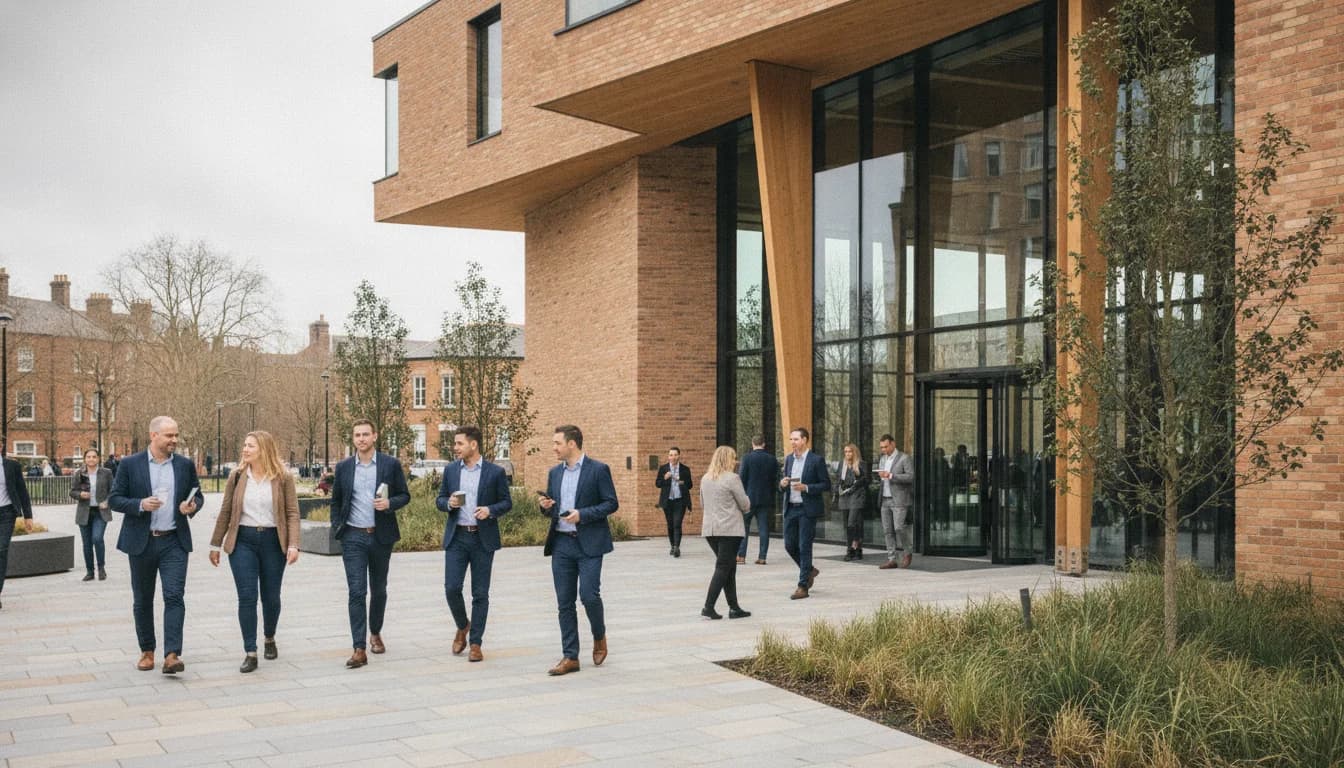
In Boston on September 17, 2026, Roche and Genentech celebrated the grand opening of the Roche Genentech Innovation Center Boston at Harvard’s Enterprise Research Campus in Allston. The event, described by Roche as a watershed moment for its US research footprint, brought together leadership from Roche, Genentech, and local government to underscore a long-term commitment to cardiovascular, renal, and metabolic research within a city long known for its life sciences cluster. The official unveiling followed months of planning and collaboration with local academic and civic partners, signaling a deeper integration of discovery biology, translational medicine, and AI-driven data science under one roof. According to Roche’s September 17, 2026 media release, the Innovation Center Boston is a 95,000-square-foot hub designed to host a multidisciplinary team in discovery through clinical development, with a capacity for up to 500 people. This represents a tangible expansion of Roche and Genentech’s U.S. research ecosystem and aligns with the broader company strategy to accelerate innovation across CVRM pipelines. (roche.com)
Daily Bostonian notes the center’s position within Harvard’s Enterprise Research Campus (Allston) and highlights the collaborative atmosphere as a core attribute of the project. The launch underscores Boston’s role as a national hub for life sciences, AI-enabled drug discovery, and cross-institutional research programs. The opening also featured a slate of events, including the Inaugural Science Symposium, Frontiers in CVRM, held at Klarman Hall at Harvard Business School, which brought Roche, Genentech, and regional researchers into dialogue about cardiovascular, renal, and metabolic disease challenges and opportunities in a data-rich era. The company’s public materials emphasize that RGIC Boston will complement existing hubs in South San Francisco and Basel while anchoring a robust end-to-end research workflow in one of the world’s most active life sciences ecosystems. (roche.com)
What Happened
Announcement and Scope
Roche and Genentech formally announced the grand opening of the Roche Genentech Innovation Center Boston on September 17, 2026, positioning the facility as a dedicated CVRM hub within Boston’s ERC ecosystem. The release emphasizes the center’s mission to fuse discovery biology, translational work, clinical development, and data science—including AI—under a single roof to accelerate drug discovery and development. The scope is designed to leverage Boston’s talent pool and institutional ecosystem while expanding Roche and Genentech’s U.S. innovation footprint. The announcement also notes a 10-year lease for the 95,000-square-foot site and a capacity to accommodate up to 500 occupants. (roche.com)
Genentech’s accompanying release echoes these themes, stressing the center’s role in strengthening the collaboration between Roche and Genentech within a globally connected R&D network. It frames RGIC Boston as a bridge between established U.S. and European research hubs and Boston’s local academic and industry partners, reinforcing a long-term investment in the city’s life sciences landscape. (gene.com)
The facility’s footprint is clear in Roche’s communications: a 95,000-square-foot space designed to host up to 500 people, with a focus on cardiovascular, renal, and metabolic disease research, augmented by data science and AI capabilities. This aligns with the broader Roche investment narrative in the United States and complements prior expansions and manufacturing milestones in other states. (roche.com)
Timeline and Milestones
Initial launch: Roche announced plans for RGIC Boston in a March 7, 2025 release, framing the project as a strategic addition to the Enterprise Research Campus and highlighting the integration of cardiovascular, renal, and metabolic science with data science and AI. That filing laid the groundwork for the 2026 grand opening and the lease arrangement, and it situates RGIC Boston within Roche’s wider U.S. investment strategy. (roche.com)
Grand opening: The official grand opening occurred on September 17, 2026, with leadership from Roche, Genentech, and Boston municipal figures present. The event narrative emphasizes the center’s 95,000-square-foot footprint and 500-person capacity, and it positions RGIC Boston as a critical node in the company’s United States CVRM research network. (roche.com)
Inaugural science event: As part of the opening, Roche and Genentech hosted the Inaugural Science Symposium, Frontiers in CVRM, at Harvard Business School’s Klarman Hall, to showcase research priorities and collaboration opportunities across academia and industry. This signals an active, ongoing research and discussion agenda beyond the physical opening. (roche.com)
Key Facts and Figures
- Location: Harvard’s Enterprise Research Campus, Allston, Boston.
- Facility size: 95,000 square feet.
- Occupancy capacity: up to 500 people.
- Lease term: 10 years.
- Focus areas: Cardiovascular, Renal, and Metabolic (CVRM) research; computational biology, data science, and AI-enabled drug discovery.
- Opening date: September 17, 2026.
- Public support: Boston mayoral and state/civic engagement highlighted in the accompanying statements and coverage. (roche.com)
Why It Matters
Impact on CVRM Research
The RGIC Boston hub consolidates multidisciplinary capabilities in a single campus, combining discovery biology, translational research, and clinical development with AI and data science. This “end-to-end” configuration is designed to shorten development timelines by enabling rapid feedback loops between preclinical work, translational studies, and regulatory considerations. In Boston’s ecosystem, this arrangement is intended to accelerate the translation of CVRM science into clinically meaningful outcomes. The official materials underscore that the center’s design is intended to “drive innovation in drug discovery and development” through an integrated platform. (roche.com)
By colocating cardiovascular, metabolic, and renal science with advanced analytical capabilities, RGIC Boston aligns with Boston’s strengths in biopharma, AI, and biomedical engineering. The Inaugural Science Symposium highlighted collaborations spanning academia, industry, and government, signaling that RGIC Boston is not just a lab space but a collaborative platform intended to mobilize Boston’s institutional strengths toward common CVRM challenges. (roche.com)
Strategic Collaboration in a Global Context
- Roche and Genentech emphasize that RGIC Boston complements the company’s existing hubs in South San Francisco and Basel, highlighting a strategic distribution of expertise across markets. This arrangement is framed as a way to plug into the Boston area’s deep AI talent and its universities and teaching hospitals, thereby accelerating the development of data-driven therapies. The presence in Allston further anchors Roche/Genentech’s U.S. footprint within a dense life sciences cluster. (roche.com)
Implications for Boston’s Life Sciences Ecosystem
The center’s arrival reinforces Boston’s status as a leading life sciences hub and enhances the city’s competitiveness in attracting RD&E investment from global pharma players. Local leadership, including the mayor’s office, framed the investment as a signal of confidence in Boston’s ability to host large-scale, cross-disciplinary research initiatives that link academia, industry, and government. The public remarks emphasize job creation potential and the broader economic activity tied to a new, large-scale research campus. (roche.com)
The project lands within Boston’s broader Enterprise Research Campus initiative, which brings together academia, private developers, and corporate partners to create a highly integrated research and innovation district. RGIC Boston’s footprint and activities are designed to contribute to the ERC’s mission of accelerating scientific advance and commercial translation in a way that benefits the city’s residents and workforce. (roche.com)
Who Benefits and How
- Stakeholders include Roche and Genentech researchers, Boston-area universities and hospitals, local policymakers, and the broader life sciences workforce. The center’s model—combining biology, clinical development, and data science—supports cross-disciplinary training and collaboration opportunities, potentially broadening the pipeline for CVRM therapies that leverage AI-enabled insights. The grand opening communications underscore these collaboration objectives and the commitment to public-private partnerships that strengthen the regional innovation economy. (gene.com)
What’s Next
Timeline and Next Steps
Ongoing collaboration with Harvard’s ERC and adjacent campuses will likely shape hiring, lab space allocations, and joint programs in the near term. While the grand opening marks a milestone, continued programming—such as the Frontiers in CVRM symposium—will serve as a proxy for the center’s operational cadence and research priorities in the months ahead. Look for announcements about new joint projects, investigator hires, and potential industry partnerships tied to RGIC Boston’s CVRM focus. (roche.com)
The experience of RGIC Boston is intended to inform Roche and Genentech’s broader U.S. investments in manufacturing, research, and development. The company’s public materials frame RGIC Boston as part of a USD 50 billion commitment in U.S. manufacturing and R&D, continuing a pattern of site-specific expansions that include other facilities and milestones. Observers should watch for announcements about future capacities, additional partnerships, and potential follow-on programs tied to this investment strategy. (roche.com)
What to Watch For
New research collaborations and publications emerging from RGIC Boston, particularly in cardiovascular, renal, and metabolic disease areas, amplified by AI-enabled data analysis and machine learning applications. The center’s integrated model provides a platform for rapid translation from bench to clinic, and evidence of collaborative outputs—such as joint papers, conference presentations, or clinical collaborations—will be a key signal of early impact. (gene.com)
Workforce and ecosystem signals: job postings, joint postdoctoral programs, or industry-academic partnerships announced in the Boston market will indicate how RGIC Boston is integrating into the local talent pipeline. Public statements from city officials and partner institutions will help gauge the center’s short-term and mid-term economic footprint. (roche.com)
Closing
The opening of the Roche Genentech Innovation Center Boston marks a significant milestone in Roche’s U.S. research architecture and in Boston’s standing as a global life sciences hub. By consolidating CVRM research, AI-enabled drug discovery, and end-to-end development under one roof, RGIC Boston positions itself as a catalyst for faster translation of science into therapies, while strengthening the city’s collaboration-intensive ecosystem. As the facility settles into its first years of operation, expect a steady stream of collaborative programs, joint research outputs, and new partnerships that translate the grand opening into measurable scientific and economic activity for the Boston region.
Readers seeking ongoing coverage should monitor RGIC Boston updates through Roche and Genentech press channels, as well as locally focused science and business outlets that track Boston’s life sciences developments. The center’s progress will unfold over the coming quarters, with new programs and collaborations likely to surface as researchers, clinicians, and data scientists begin to leverage the hub’s integrated capabilities.
About the author
Eleanor Whitcomb
Eleanor Whitcomb is the editor of Daily Bostonian. She has covered Boston City Hall and the State House, and edits the paper's daily report.