Analysis
New England Michelin Keys: 2 Won, 4 Lost Ground
New England gained two Michelin Keys in the 2026 selection and had four hotels lose ground, including Mandarin Oriental Boston. The region finished the year exactly where it started.
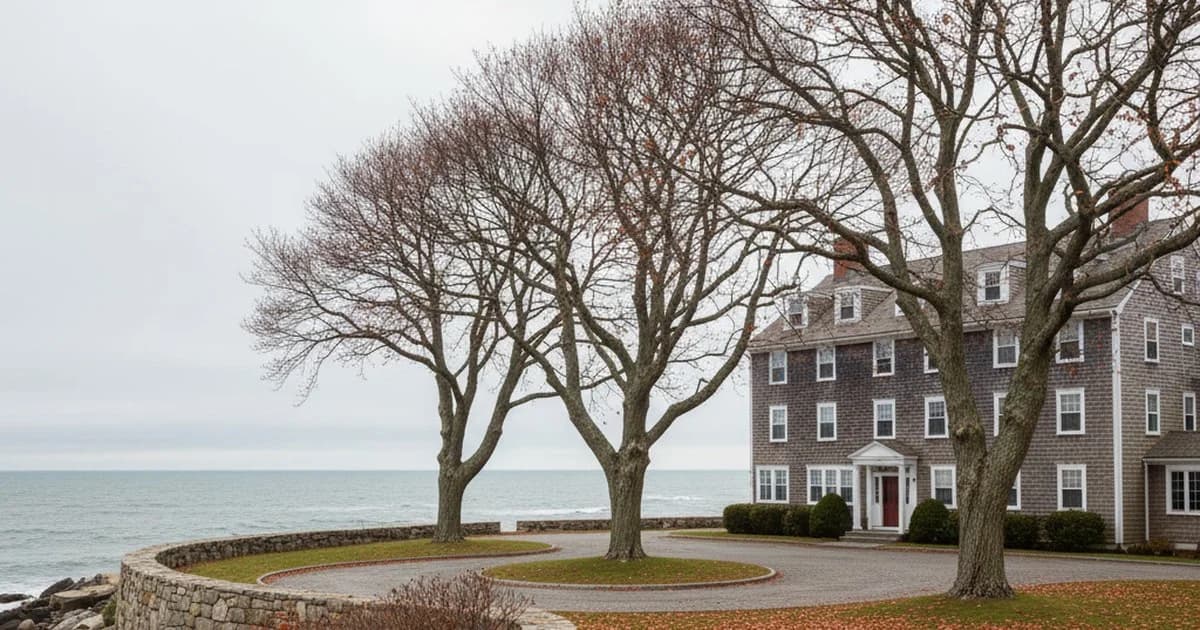
New England is the only market in this series that finished the 2026 MICHELIN Key selection exactly where it started. Two hotels gained a Key. Two dropped a tier. Two lost their Key outright. The region holds 35 Key hotels, the same number as in 2025.
It stood still in a year when the global Key list grew 15.3 percent.

Chart: hotels that gained or lost MICHELIN Key standing in the 2026 selection. Source: MICHELIN Guide 2026 Key selection, released 18 September 2026, compared against the 2025 selection. Every hotel counted here was read from the Guide's own listings; every loss was re-checked on the hotel's own Guide page.
The scoreboard
| Movement | Hotels |
|---|---|
| New Keys awarded | 2 |
| Upgraded a tier | 0 |
| Dropped a tier | 2 |
| Key removed | 2 |
| Key hotels, 2025 → 2026 | 35 → 35 |
What gained
| Hotel | Where | 2025 | 2026 | Change |
|---|---|---|---|---|
| Prospect Berkshires | Egremont | no Key | One Key | New Key |
| XV Beacon | Boston | no Key | One Key | New Key |
What lost ground
| Hotel | Where | 2025 | 2026 | Change |
|---|---|---|---|---|
| Inn at Thorn Hill | Jackson | Two Keys | One Key | Dropped a tier |
| The Whitney Hotel Boston | Boston | Two Keys | One Key | Dropped a tier |
| Castle Hill Inn | Newport | Two Keys | no Key | Key removed |
| Mandarin Oriental Boston | Boston | One Key | no Key | Key removed |
Boston gained one and lost one
XV Beacon, the pre-Revolutionary mansion a block north of Boston Common, enters the list at One Key. It is a fair portrait of what the city sells at the top of its market: small, old, well-run, and disinclined to announce itself.
In the same selection, Mandarin Oriental Boston lost the One Key it held in 2025, and The Whitney Hotel Boston dropped from Two Keys to One. The city therefore ends the year with one more Key hotel on the list and one fewer at the top of it.
The second addition, Prospect Berkshires, is 210 kilometres west: 49 hand-built cabins on Prospect Lake, with saunas and a heated saltwater pool. It belongs to the category MICHELIN said drove the American selection — outdoor immersion at scale — and it was the only Massachusetts property that qualified.
Rhode Island and New Hampshire went backwards
Castle Hill Inn in Newport held Two Keys in 2025 and holds none in 2026, which takes Rhode Island from four Key hotels to three. Inn at Thorn Hill in Jackson, New Hampshire dropped from Two Keys to One.
| State | Key hotels 2025 | Key hotels 2026 |
|---|---|---|
| Massachusetts | 16 | 17 |
| Maine | 9 | 9 |
| Rhode Island | 4 | 3 |
| Vermont | 3 | 3 |
| Connecticut | 2 | 2 |
| New Hampshire | 1 | 1 |
Maine, Vermont, Connecticut and New Hampshire were unchanged in count. Massachusetts gained one. Rhode Island lost one. That is the whole of New England's year.
Why the region is flat
MICHELIN's American selection this year leaned hard toward outdoor and rural hospitality at scale — mountain lodges, working ranches, lake cabins, farm stays — and found most of it in the West and the South. New England has the landscape. It has comparatively few operators running properties of that size and ambition into it, and Prospect Berkshires was the region's single entry in that category.
The wider 2026 picture
Worldwide the Key list grew 15.3 percent in a year, from 2,457 hotels to 2,832. That growth was not evenly spread across the tiers: One-Key hotels rose 16.0 percent and Two-Key hotels 14.9 percent, while Three-Key hotels rose only 8.4 percent, from 143 to 155. The top tier's share of the list fell from 5.82 percent to 5.47 percent.
| Tier | 2025 | 2026 | Change |
|---|---|---|---|
| Three Keys | 143 | 155 | +8.4% |
| Two Keys | 572 | 657 | +14.9% |
| One Key | 1,742 | 2,020 | +16.0% |
| All Key hotels | 2,457 | 2,832 | +15.3% |
Growth on that scale means removals are easy to miss. Across our full reading of the 2026 selection, 482 hotels gained a Key they did not hold in 2025 and 86 moved up a tier, while 85 lost their Key outright and 28 dropped a tier. The Guide publicises the additions; the subtractions arrive without an announcement.
How these numbers were checked
Every hotel named above was read from the MICHELIN Guide's own country listings, where each property carries an explicit One-, Two- or Three-Key marking, and the totals reconcile to the counts the Guide published on 18 September 2026.
Losses were then checked a second time, one hotel at a time, against that property's own page on the Guide. That second pass matters: a hotel missing from a country listing has not necessarily lost anything, because several properties that plainly still hold Keys never appear in those listings at all. Only a hotel that the Guide still lists, without a Key, has actually lost one. Every removal and downgrade in this article cleared both checks.
One property in this round did something different again: where a hotel's Guide page has been taken down entirely, it has left the selection rather than merely lost its Key, and that is stated as such rather than counted as a downgrade.
What a MICHELIN Key is
MICHELIN introduced the Key in 2024 as the hotel counterpart to its restaurant Star. Inspectors assess architecture, interior design, service, character, consistency and value across a selection of more than 9,000 hotels in over 100 countries, and award One, Two or Three Keys: a very special stay, an exceptional one, an extraordinary one. Nightly rate is not a criterion, which is why a four-cottage property and a 500-room resort can hold the same distinction.
The 2026 selection, the second, named 2,832 Key hotels worldwide — 155 with Three Keys, 657 with Two and 2,020 with One — against 2,457 a year earlier. The criteria are set out in the Guide's explainer on the Key, and the full country-by-country list is published here.
About the author
Terrence Boyle
Terrence Boyle covers housing, transit and the regional economy for Daily Bostonian, from the MBTA and development fights to the employers driving growth around Boston.