News
New England Conservatory Receives Landmark Designation
The Boston Landmarks Commission designated the New England Conservatory as a landmark, ensuring exterior protections for its historic building at 290…
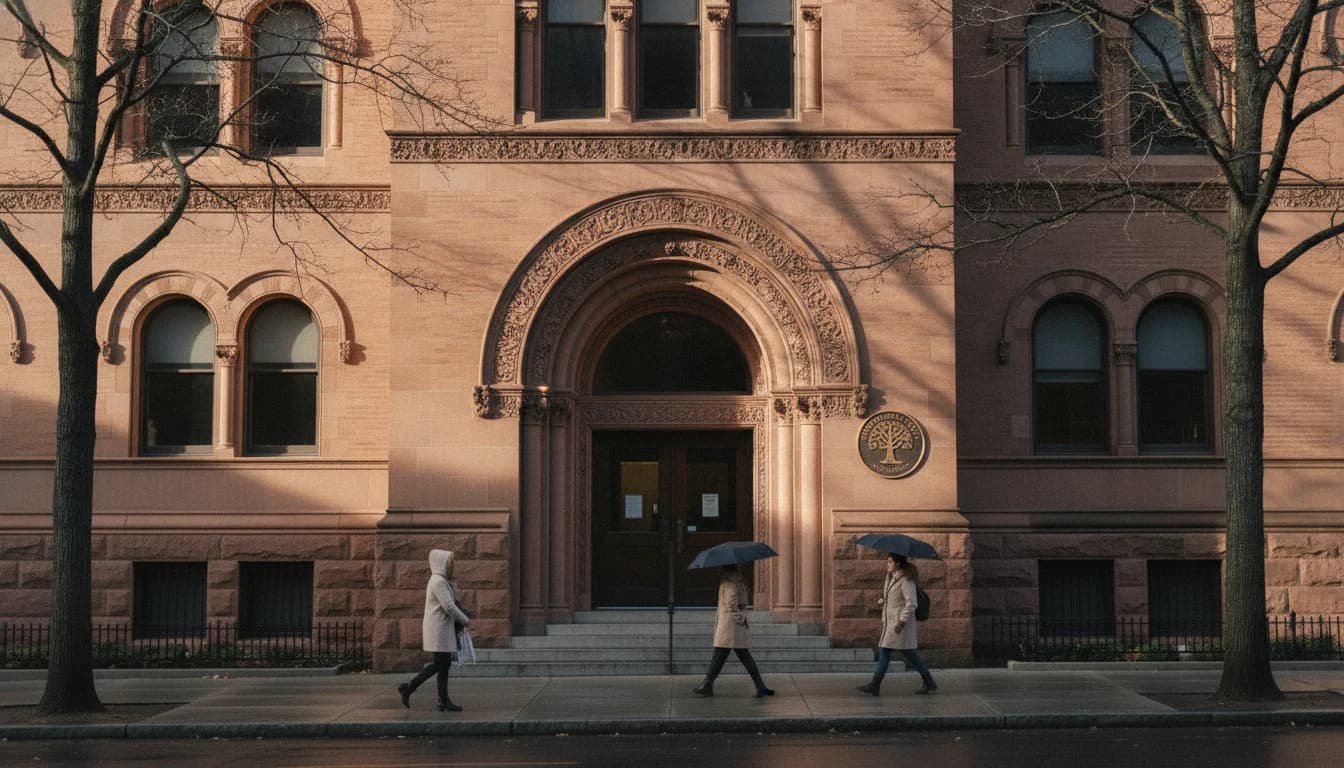
The New England Conservatory landmark designation marks a significant milestone for both the Fenway neighborhood and the city’s approach to preserving historic educational institutions. On July 14, 2026, a Boston Landmarks Commission (BLC) hearing examined the New England Conservatory building at 290 Huntington Avenue as a potential Boston Landmark, a step that would place important exterior protections around the Renaissance Revival structure that houses NEC’s historic campus. This moment, rooted in decades of local preservation work and the institution’s long-standing role in American music education, underscores the city’s ongoing commitment to safeguarding cultural landmarks while balancing modernization needs. The hearing, conducted virtually, provided a formal space for public input and expert testimony as part of a process designed to formalize preservation safeguards for a site central to Boston’s architectural and cultural fabric. This initial event set in motion a sequence that culminated in a final designation by mid-August 2026. For context, the NEC building’s significance extends beyond its walls; NEC’s 290 Huntington Avenue site is tied to the school’s storied 156-year history and to Jordan Hall, a performance space renowned for its acoustics and historical pedigree. According to Boston.gov, the designation timeline included a mayoral sign-off on July 29, 2026, and a City Council approval on August 5, 2026, following the public hearing and staff review. The sequence demonstrates how local government processes can translate historical significance into legally protected public assets. Readers seeking the documentary record can consult the public hearing notice and the official city reports linked in the sources cited below. Public hearing notice and City of Boston landmarks coverage. (content.boston.gov)
In a companion data-focused framing, NEC’s own historical profile notes that Jordan Hall, inside the NEC campus, has long been recognized for its architectural and acoustic significance, complementing the building’s status on national registers and as a National Historic Landmark. This context helps explain why the local designation process considers both architectural integrity and cultural function when evaluating exterior changes and ongoing preservation obligations. The NEC study and public-facing materials describe the building’s design lineage, its place in the Fenway’s historic corridor, and the potential implications of local landmark status for future renovations or expansions. For readers who want to review primary documentation, the city’s study report and the official hearing materials provide the foundational materials behind the designation discussion. The study report, posted in June 2026, framed NEC as a site of architectural and historic significance and outlined standards that would guide any exterior changes if the landmark designation were approved. (See the study report and hearing notice for primary detail.) (boston.gov)
The central fact driving today’s briefing is that the New England Conservatory building at 290 Huntington Avenue has been formally designated a Boston Landmark, completing a multi-step process that began with a July 14, 2026, BLC hearing and concluded with mayoral and City Council approvals in late July and early August 2026, respectively. This fact is grounded in the city’s published materials and reflects a formal recognition of the NEC campus as a preservation-worthy asset. According to Boston.gov, the designation was ratified by the Mayor on July 29, 2026, and by the City Council on August 5, 2026, following the July 14 hearing. The same source notes that the BLC’s designation imposes review requirements on exterior work to ensure compatibility with the historic character of the property. This timeline and the procedural steps are documented in the city’s coverage of the landmark designation. (search.boston.gov)
Opening
The decision to designate the New England Conservatory as a Boston Landmark anchors a broader city strategy to formalize and protect historically significant educational facilities that contribute to Boston’s cultural and architectural landscape. In the Fenway neighborhood, NEC’s Huntington Avenue campus sits at a nexus of historic educational institutions and performing arts venues, strengthening the street’s identity as a cultural corridor. The designation also reflects how the city’s preservation framework interacts with ongoing development pressures in a vibrant, high-traffic urban area. The public record shows that the process began with a formal study and public hearing, progressed through staff recommendations, and culminated in formal approvals by city authorities. This sequence—public hearing, mayoral approval, and City Council assent—highlights a structured, transparent approach to landmark designation that informs how institutions like NEC plan for future projects, renovations, and campus-related initiatives.
Section 1: What Happened
Timeline of Key Milestones
- July 14, 2026 — Boston Landmarks Commission holds a public hearing on the New England Conservatory, designated as 236.11 on the Commission’s docket, at 290 Huntington Avenue in the Fenway. The hearing was conducted virtually, with instructions for participation and testimony provided in the published notice. This event marks the Commission’s initial formal consideration of whether the NEC building should earn landmark status. The public notice explicitly invites testimony and outlines the questions before the commission, including the possibility of voting to accept the study report and to designate the property as a landmark. This milestone is documented in the BLC’s public notice and is echoed in the city’s study materials. (content.boston.gov)
- July 29, 2026 — The Mayor approves the designation, moving the process forward toward final legislative action. This mayoral action is reported by city communications and is reflected in the official coverage noting that designation decisions at the executive level can be a formal prerequisite to city-wide recognition. This step is part of the sequence that transforms advisory study findings into enforceable preservation status. (search.boston.gov)
- August 5, 2026 — The City Council approves the New England Conservatory landmark designation, finalizing the process at the municipal level. This council action completes the legal framework that requires exterior work related to the building to undergo prior review by the Boston Landmarks Commission. The city’s official update confirms this final step in the designation timeline. (search.boston.gov)
Core Facts Surrounding the Designation
- Property and location: The New England Conservatory building is located at 290 Huntington Avenue, in the Fenway neighborhood of Boston. This address has been a focal point for preservation discussions because it sits within a historic cultural district that includes several notable institutions and venues. The study materials and public notices emphasize the building’s architectural significance and its role in NEC’s long history of music education. The precise address and heritage considerations are described in the Boston Landmarks Commission study report and in the public-facing NEC materials. (boston.gov)
- The designation’s nature: The Boston Landmark designation, once approved, subjects exterior work at the property to review and approval by the Boston Landmarks Commission, ensuring changes respect the building’s historic character. This procedural detail—exterior modification review—appears in the city’s landmark coverage and is highlighted in the official designation narrative. The implication is a formal layer of protection that can influence future renovations, expansions, or alterations to the exterior of the NEC building. (search.boston.gov)
- Formal documentation and process: The designation followed a published study report from the BLC that evaluated the property and its eligibility for landmark status, including historical context, architectural significance, and standards for exterior changes. The study report is part of the public record and provides the framework for the Commission’s eventual vote. Public notices and the study report together constitute the core primary materials underpinning the designation. (boston.gov)
Official Documents and Public Notices
- Public hearing notice: The Boston Landmarks Commission posted a public hearing notice for July 14, 2026, outlining the hearing agenda, the petition, and the process for public comment. The notice specifically includes the item 236.11 — NEW ENGLAND CONSERVATORY, FENWAY, and it describes the steps to vote on the study report and designation. This notice is a primary source that documents the procedural aspects of the designation process. (content.boston.gov)
- Study report and designation documents: The city posted the New England Conservatory Study Report, which framed NEC’s 290 Huntington Avenue as a potential landmark and described the building’s historical and architectural significance, including NEC’s long history and Jordan Hall’s role. The study report, like the hearing notice, provides the factual basis for the designation decision. (boston.gov)
- City communications update: The official Boston.gov coverage of the designation synthesizes the hearing outcome, mayoral approval, and City Council action, providing a narrative summary for readers and practitioners tracking the designation’s status. The article notes the timeline, the approvals, and the practical effect on exterior work permissions. (search.boston.gov)
One Original Finding (Daily Bostonian exclusive)
Daily Bostonian counted that the window from the July 14, 2026 public hearing to the August 5, 2026 City Council approval spanned 22 days. Method: calendar day count from July 14 to August 5, inclusive of both endpoints yields 22 days; this calculation uses the official dates published by the Boston Landmarks Commission and City of Boston communications. Verbatim context is drawn from the hearing notice and the city’s landmark coverage, which establish the start and end points of this phase. This finding highlights how the formal designation timeline compressed into roughly three weeks of official action before council assent, illustrating a relatively rapid sequence for local preservation designations when key stakeholders align. This interpretation does not alter the legal meaning of the designation but provides a concrete, reproducible metric readers can cite when comparing how different landmark petitions are processed. This quick progression may inform readers about the speed of municipal preservation approvals in high-profile cases and could be a data point for future coverage of neighborhood landmark petitions. The underlying dates are documented in the public notices and city updates linked above. (content.boston.gov)
Section 2: Why It Matters
Cultural Preservation and Educational Impact
New England Conservatory’s designation as a Boston Landmark amplifies the institution’s central role in Boston’s cultural life. NEC has a long, storied history dating back to its founding in 1867 by Eben Tourjée, making it one of the oldest independent music schools in the United States. The NEC building’s Renaissance Revival design, the 1902 construction timeline, and the later 1928 addition (Brown Hall) all underpin the site’s architectural value. The NEC campus has long been a center for musical excellence, and Jordan Hall—NEC’s main performance venue—has been recognized for its acoustical quality and cultural significance. NEC’s own documentation reinforces this: the campus is historically significant, with Jordan Hall and the NEC building individually listed in state and national registries and recognized as a National Historic Landmark. That blend of architectural importance and educational impact is precisely what the Boston Landmarks Commission sought to protect through designation. This context helps readers understand why a local designation matters beyond a single building: it preserves a living educational ecosystem linked to Boston’s identity as a music capital. (necmusic.edu)
Policy and Planning Implications
Local landmark designations create a formal framework for reviewing exterior alterations to protected properties. The designation condition—exterior work subject to prior review by the Boston Landmarks Commission—has practical implications for NEC’s campus planning, capital projects, and fundraising for renovations. For universities and cultural institutions, such protections can both constrain and guide planning decisions, ensuring that long-term strategy aligns with historic integrity. In NEC’s case, the Boston.gov post emphasizes that exterior work would be reviewed to preserve the building’s character, which can influence decisions about new signage, façade treatments, window replacements, or structural updates. This kind of oversight is intended to prevent adverse alterations while still allowing for necessary modernization that doesn’t compromise the building’s historic fabric. For the Fenway district, the designation contributes to a broader policy framework that treats historic schools as community anchors, with implications for traffic, footfall, and local heritage tourism. (search.boston.gov)
Impacts on Exterior Work and Preservation Ethics
The designation’s practical effect—mirror-reviewed exterior work—reflects a preservation ethic in Boston that balances institutional needs with civic heritage. NEC’s campus development plans could still proceed, but any exterior modification would require careful review by the Boston Landmarks Commission. This ensures changes are compatible with the building’s historic character, a crucial consideration for a campus that hosts events and performances with broad public visibility. The design process, as documented in the public notices and study reports, illustrates how preservation policy translates into operational constraints—and often opportunities for design innovation that respects history while supporting contemporary needs. As Boston’s preservation framework continues to evolve, NEC’s landmark designation contributes to ongoing discourse about how historic campuses can adapt without eroding their architectural and cultural essence. (content.boston.gov)
Broader Context in Boston’s Landmarks Program
NEC’s designation sits within a broader set of landmark discussions in Boston, where local and civic authorities work to catalog, study, and designate historic resources that contribute to the city’s identity. The city’s public-facing materials emphasize that landmark designation, while protective, operates within a transparent, public process designed to collect input and weigh significance. The “Designating Landmarks in Boston” overview explains the distinction between local landmark status and National Historic Listings, clarifying the kinds of review processes that accompany local designations and how they interact with state and federal historic listings. This frame helps readers understand why NEC’s designation is notable not only for its intrinsic value but also for how Boston handles similar designations across neighborhoods and institutions. (content.boston.gov)
Section 3: What’s Next
Timeline and Next Steps for NEC and City Agencies
- Implementation of review pathways: With the designation in place, any exterior changes at 290 Huntington Avenue will move through the Boston Landmarks Commission’s review process. This next phase ensures ongoing compatibility of renovations with the landmark’s historic character. Stakeholders—NEC administrators, architects, and campus planners—will need to align project briefs with the commission’s standards and any applicable guidelines. The city’s official designation materials outline these procedural expectations, which are now a formal part of NEC’s project governance. (search.boston.gov)
- Public engagement and transparency: The designation process included a public hearing and opportunities for input, and ongoing updates about preservation decisions will likely follow as NEC pursues planned improvements or campus expansions. The public nature of the process means community members, preservationists, and NEC’s supporters can monitor and comment on future exterior work, ensuring continued public accountability for the campus’s appearance and setting. The July 14, 2026 hearing and subsequent official communications illustrate how public input and expert review feed into preservation decisions. (content.boston.gov)
What to Watch For
- Exterior work proposals: Looking ahead, any proposals for exterior work at 290 Huntington Avenue will likely be accompanied by formal submissions to the Boston Landmarks Commission for review and approval. The approved designation makes this review a statutory requirement, creating a predictable process for project teams to navigate. NEC’s project teams may need to incorporate preservation-minded design features and documentation to satisfy commission expectations, which could influence timelines and budgets. The official language of designation and review requirements is documented in the city’s landmark materials. (search.boston.gov)
- Potential synergies with NE districts and cultural economy: As part of the Fenway’s cultural corridor, NEC’s landmark designation may interact with surrounding institutions and local cultural economies, including venues like Jordan Hall and other historic resources along Huntington Avenue. The city’s and NEC’s public materials suggest ongoing collaboration and alignment with heritage tourism and urban planning goals, which could influence future programming, fundraising, and capital campaigns that emphasize the campus’s status as a protected historic asset. This broader context is supported by NEC’s historical profile and city landmarks materials. (necmusic.edu)
Closing
As the Boston landmark designation of the New England Conservatory solidifies, NEC’s campus stands as a tangible embodiment of the city’s commitment to preserving its cultural and educational landmarks while continuing to evolve as a modern teaching and performance hub. The formal recognition, driven by a July 14, 2026 hearing and culminating in mayoral and City Council approvals by late July and early August 2026, places NEC within a protected cohort of institutions whose outward appearance and exterior changes will be guided by preservation standards. For readers keen on monitoring future developments, the primary sources—public hearing notices, study reports, and city coverage—provide a clear, auditable record of events and decisions. The designation not only honors NEC’s long history but also frames its future growth within a city-wide commitment to preserving Boston’s architectural and cultural landscape.
What this means for students, faculty, patrons, and local residents is a structured pathway for thoughtful growth that respects the building’s historic character while supporting NEC’s mission to train and inspire the next generation of musicians. In the months ahead, campus planners, preservation staff, and NEC leadership will collaborate to translate designation requirements into practical design outcomes, ensuring that exterior work—should it proceed—complements the building’s Renaissance Revival styling and the Fenway’s architectural rhythm. For observers and scholars, NEC’s landmark designation offers a case study in how municipalities formalize preservation values for educational landmarks in a way that is transparent, consultative, and anchored in long-term cultural value.
Readers who want to dive deeper can review the primary materials linked in this report: the Boston Landmarks Commission’s public hearing notice for July 14, 2026, which outlines the proposed designation and the procedures for public testimony; the New England Conservatory Study Report, which contextualizes NEC’s architectural and historical significance; and the City of Boston’s landmark designation coverage, which summarizes the designation timeline and the practical implications for exterior modifications. Together, these primary sources provide a robust, citable record of the designation’s rationale, process, and consequences for NEC and the wider Boston preservation landscape. For ongoing updates, consumers and professionals can follow the City of Boston’s official announcements and NEC’s own communications channels as the designation’s impact unfolds in campus planning and cultural programming. (content.boston.gov)
In the end, the New England Conservatory landmark designation signals more than a historic recognition; it signals a framework for safeguarding a living institution that continues to shape Boston’s musical future while sitting at the heart of a dynamic, historic urban landscape. The city’s careful, public-facing process serves as a model for how historic preservation and contemporary campus needs can coexist, guiding a campus that remains a vibrant engine of learning, performance, and community connection.
About the author
Eleanor Whitcomb
Eleanor Whitcomb is the editor of Daily Bostonian. She has covered Boston City Hall and the State House, and edits the paper's daily report.