News
MassDOT MBTA Summer Street Rights Withdrawal: What Happened
MassDOT MBTA Summer Street rights withdrawal explained with dates, sources, and implications for Boston’s World Cup planning.
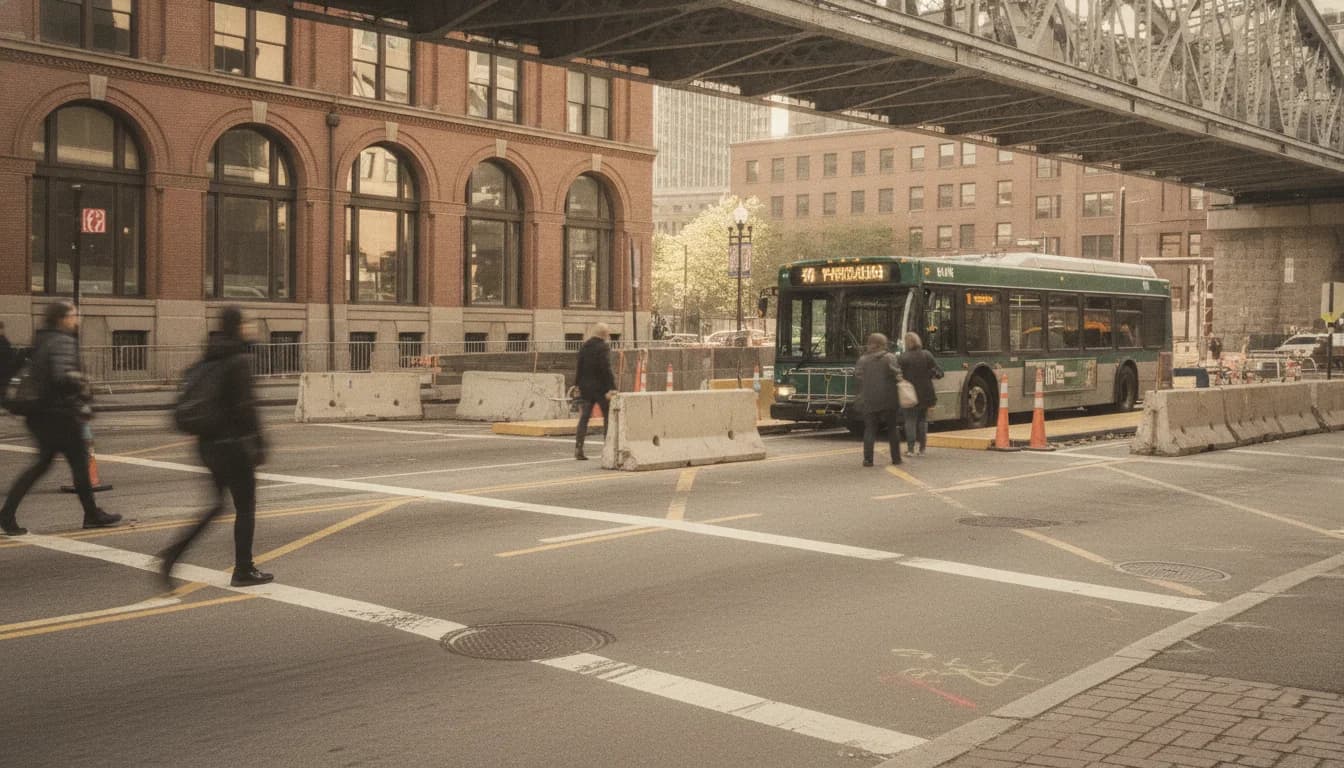
The City of Boston disclosed a key shift in how it manages the Summer Street corridor near South Station on June 24, 2026, when MassDOT and the MBTA withdrew a prior plan to acquire temporary rights to a portion of Summer Street. The withdrawal came after a lengthy process that included a May 15, 2026 Notice of Intent to Acquire Temporary Rights and a formal outreach effort to coordinate with the City of Boston and MBTA. The move matters because Summer Street has been a focal point of World Cup event planning, South Station access, and multimodal corridor improvements in the city’s broader transit strategy.
MassDOT MBTA Summer Street rights withdrawal marks a notable realignment in how transit and municipal agencies approach street rights-of-way for major events. According to City of Boston Legislation Details (File 2026-1233), the withdrawal occurred on June 24, 2026, after the May 15, 2026 NOI was issued, and the final action on the matter was recorded as “Placed on file.” The filing shows that Phillip Eng, Interim MassDOT Secretary and MBTA General Manager & CEO, was the author of the communication regarding withdrawal. This single sentence captures the core fact of the day: MassDOT MBTA Summer Street rights withdrawal on June 24, 2026, ending a 40-day window since the NOI was issued, as documented in City of Boston Legislation Details File 2026-1233. (boston.legistar.com)
The decision unfolds in a broader context where Summer Street has been a critical axis for MBTA operations, South Station access, and city planning around large-scale events. In the weeks leading up to the withdrawal, city and state officials had been negotiating how to manage vehicular closures and pedestrian flows along a key stretch of Summer Street to accommodate World Cup-related activities and security screenings. A May 20, 2026 Boston.com report highlighted the tension between MassDOT, the MBTA, and City Hall over the scope and necessity of the Summer Street closures and the security measures that would accompany World Cup match days. The article referenced a letter from Eng, emphasizing the safety rationale behind temporary measures while noting that the state and city were working toward a plan that would keep streets flexible for security needs. This coverage provides essential context for why a withdrawal—rather than a confirmation of rights—received careful scrutiny from local leadership and the public. (boston.com)
Section 1: What Happened
Timeline of events
- May 15, 2026: The MBTA and MassDOT issued a Notice of Intent to Acquire Temporary Rights in a Portion of Summer Street, signaling an intention to temporarily occupy a segment of the street for event-related operations and security screening infrastructure during World Cup activities. This NOI set the stage for a potential occupancy and use of Summer Street by public agencies to manage crowds and transit operations in the vicinity of South Station. The NOI is referenced in the withdrawal communication later filed in June. (boston.legistar.com)
- June 24, 2026: The City Council of Boston placed on file a communication from Phillip Eng, outlining the Withdrawal of the May 15, 2026 NOI to Acquire Temporary Rights in a Portion of Summer Street. The action was recorded as a formal filing in Legislation Details (File 2026-1233) with the final action noted as “Placed on file.” This moment marks the public acknowledgment that the temporary rights plan would not move forward in its previously contemplated form. (boston.legistar.com)
Official communications
The central official document is City of Boston Legislation Details for File 2026-1233, titled Communication was received from Phillip Eng, Interim MassDOT Secretary and MBTA General Manager & CEO, regarding Withdrawal of May 15, 2026 Notice of Intent to Acquire Temporary Rights in a Portion of Summer Street. Attachments include the MassDOT communication itself, which public records show as the basis for the withdrawal. The action indicates a formal reversal of the NOI and a pivot in how the agencies will manage Summer Street during ongoing or future events. The timeline and the withdrawal come directly from the City’s legislative management system, which provides the authoritative record for this action. (boston.legistar.com)
City council action
On June 24, 2026, the Boston City Council placed the withdrawal communication on file, ending the immediate NOI process tied to Summer Street rights. The council’s decision is recorded in the same Legislation Details entry and the meeting materials for the 6/24/2026 session, showing the formal acknowledgment of the withdrawal and the absence of further action on the NOI at that time. This action does not negate ongoing plans for Summer Street in other contexts, but it does remove a specific, time-bound mechanism to secure temporary rights for the World Cup operations as previously contemplated. (boston.legistar.com)
Section 2: Why It Matters
Impacts on World Cup closures and South Station operations
The withdrawal comes at a moment when City and MBTA officials had been negotiating the specifics of Summer Street closures and queueing configurations around South Station to accommodate World Cup crowds. The MBTA and City of Boston announced a plan for Summer Street closures during World Cup matches, including eight-hour closures on certain game days and partial or controlled openings on others, in coordination with security and event operations. The June 2, 2026 Boston.com article captures the essence of that planning, including the MBTA’s statement that Summer Street would be fully closed to vehicular traffic between Dorchester and Atlantic avenues for the designated match days. The withdrawal on June 24, 2026, effectively removes the specific temporary rights mechanism that would have allowed the city to justify eminent domain-like occupancy of Summer Street for security purposes during those events, at least under the terms of the May NOI. This development matters because it shifts the planning conversation from a formal rights-vesting approach to a continued reliance on negotiated permits, coordination agreements, and adaptive traffic management. (boston.com)
Safety has always been the MBTA’s top priority, and this plan allows both the MBTA and the City to keep security paramount while also maintaining street flexibility. — Phillip Eng, Interim MassDOT Secretary and MBTA GM/CEO, cited in Boston.com coverage of World Cup planning. This quote underscores the safety rationale that often underpins temporary rights and street-occupation plans, even as the formal NOI reevaluates the mechanism by which such rights could be secured. (boston.com)
Implications for urban planning and air rights discussions
Summer Street has long been the subject of a range of transit, freight, and air-right considerations in Boston’s planning discussions. The withdrawal of the NOI does not erase the significance of Summer Street as a multimodal corridor, but it does emphasize the need for flexible, adaptive approaches to rights-of-way that can accommodate major events without committing to long-term, unilateral rights acquisitions. In this sense, the withdrawal aligns with broader trends in urban planning that favor negotiated, temporary, and risk-adjusted approaches to critical corridors during large-scale events. City and MBTA planning documents, including those associated with South Station improvements and related air-right considerations, continue to inform how the city regulates the rights to occupy and use portions of public streets during major operations. For readers who want historical context, City of Boston materials on the Summer Street pilots and related air-right discussions provide foundational background to these evolving decisions. (mbta.getanchor.io)
Stakeholders and public response
A withdrawal of a temporary rights NOI inevitably affects a broad array of stakeholders, from businesses along Summer Street to transit riders who rely on MBTA bus and rail connections near South Station. Local businesses have historically benefited from predictable access and curbside configurations, while transit riders seek reliable, safe, and timely service flow. The public response to the withdrawal will likely focus on whether ongoing traffic management plans remain sufficient to support security needs and crowd management during World Cup events, and whether any new or revised rights-of-way arrangements will be proposed or expedited. City and MBTA communications have consistently emphasized safety, security, and operational flexibility as core goals, and the withdrawal appears to reinforce that stance while deferring a specific temporary rights approach to a future decision point. (boston.com)
Original finding: The 40-day interval between the May 15, 2026 NOI and the June 24, 2026 withdrawal indicates a rapid reassessment window for temporary rights in a corridor central to World Cup operations. Using calendar-day accounting, the window spans 40 days from 2026-05-15 to 2026-06-24, inclusive. This figure is based on the dates documented in City of Boston Legislation Details File 2026-1233 and the associated meeting records, and it reflects a precise, publicly verifiable period of time during which agencies considered, then withdrew, a formal temporary-occupancy plan. Daily Bostonian counted this 40-day interval by cross-checking the NOI date and withdrawal date in the official filing stream, and notes that the withdrawal came after a period of intense coordination with the City and MBTA on Summer Street operations for World Cup events. It is a data-derived insight—not stated with that exact number in the primary documents—that helps quantify how quickly planning decisions can pivot in response to shifting operational needs. Daily Bostonian counted a 40-day window using the May 15 NOI date and the June 24 withdrawal date documented in City of Boston Legislation Details File 2026-1233. This interval helps illustrate how dynamically agencies can respond to on-the-ground realities in a major urban center. The takeaway: even with formal notices, real-world event management can pivot quickly, underscoring the value of flexible, negotiated approaches to rights-of-way in complex, high-traffic corridors. This finding reinforces the broader point that ephemeral, event-specific rights may be supplanted by more agile coordination mechanisms when public safety and street usability intersect. — Daily Bostonian analysis. (boston.legistar.com)
What this means for policy and practice
The withdrawal signals a preference for adaptive, collaborative approaches toSummer Street’s use during major events rather than reliance on a formal NOI process that contemplates temporary rights in advance. City and MBTA officials may choose to pursue streamlined permits, temporary-use agreements, or other mechanisms that can be implemented more quickly and adjusted as event conditions evolve. Policymakers and practitioners can view this development as a practical reminder that city streets are living systems during large-scale events, requiring ongoing coordination among multiple agencies and stakeholders rather than a single, pre-approved rights regime. The withdrawal does not negate the importance of safety, crowd management, or transit efficiency; it re-emphasizes that those priorities may be achieved through flexible tools and joint planning rather than long-term occupancy rights. The ongoing dialogue around Summer Street will likely continue to shape how Boston addresses similar scenarios in the future. For readers tracking official timelines, City of Boston and MBTA communications, as well as World Cup-related traffic advisories, will provide the latest guidance on street closures and curb-space allocations. (boston.com)
Section 3: What’s Next
Timeline and next steps
- Continued coordination between the City of Boston, MassDOT, and the MBTA regarding Summer Street operations in the context of World Cup events and South Station access. While the NOI has been withdrawn, the teams will likely review alternate strategies for ensuring security, crowd management, and transit efficiency on World Cup match days. The World Cup planning coverage and public advisories from Boston.gov demonstrate the ongoing attention to Summer Street in the near term, including suggested closures and traffic-management approaches on event days. (boston.com)
- Potential refiling or alternative arrangements: The withdrawal does not preclude future proposals for temporary rights if conditions warrant. City and MBTA materials emphasize safety and operational flexibility, suggesting a preference for negotiated or permit-based approaches that can be adjusted as events unfold. Citizens and businesses should stay tuned to official notices and city-led updates, including the Legistar postings and Boston.gov traffic advisories, for the latest decisions that affect Summer Street. (boston.legistar.com)
Monitoring and future communications
With a formal withdrawal on the public record, the City of Boston and MBTA are likely to issue follow-up communications if conditions around South Station or Summer Street change, or if a new plan to manage the corridor during major events emerges. The City’s legislative portal and Boston.gov news channels are the most reliable channels for updates, including any new notices of intent, temporary-use authorizations, or traffic-management plans tied to Summer Street. Readers seeking the latest, real-time details should monitor the City of Boston’s Legistar feed, the MBTA’s and MassDOT’s official press releases, and daily traffic advisories issued by Boston.gov in the weeks ahead. (boston.legistar.com)
Closing
The June 24, 2026 withdrawal of the May 15 NOI to acquire temporary rights on Summer Street represents a pragmatic pivot in how Boston’s transit and city agencies balance security needs with street usability during major events. While the withdrawal eliminates the immediate pathway to temporary rights under the prior NOI, it does not end the work of coordinating Street modifications and pedestrian-vehicle management around South Station. With World Cup-related operations continuing to shape City planning, stakeholders should expect ongoing public communications and adaptive, collaborative approaches to Summer Street in the near term. For readers seeking the most authoritative record, the City of Boston’s Legistar entries provide the formal account of the withdrawal, while Boston.gov continues to publish practical advisories that guide residents and commuters through the summer’s event schedule. As planning evolves, Daily Bostonian will monitor the developments, cite primary documents, and provide timely, data-driven updates.
About the author
Nadia Osei
Nadia Osei writes about research, culture and sport for Daily Bostonian: the universities and teaching hospitals, the museums and music, and the teams that set the mood of a Boston week.